
 WASHINGTON — Four percent of legislation introduced this Congress, the 119th in the nation’s history, has gotten a vote in the Senate or House. Just 3% of symbolic resolutions — like a measure from Rep. Frank Pallone (D-6th) to mark the 50th anniversary of Bruce Springsteen’s “Born to Run” album — pass at least one of the chambers.
Just 1% of bills have been enacted this Congress, according to data from GovTrack, a nonpartisan government watchdog group. In other words: The overwhelming majority of legislation never stands a chance.
So it pays for lawmakers to know how to get language folded into a bill, since their own will rarely get a clean up-or-down vote in either chamber.
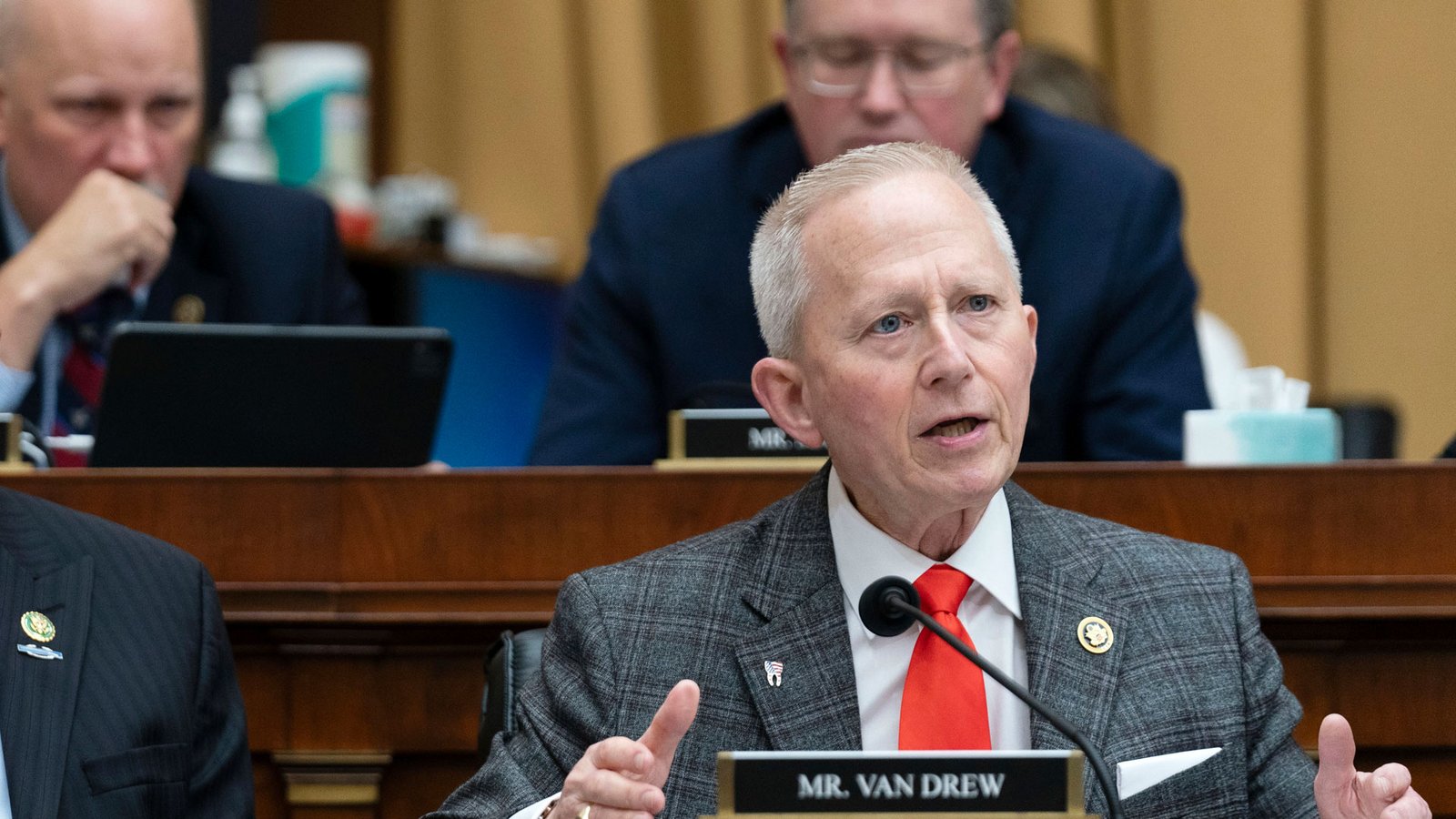
Congressmen Donald Norcross (D-1st) and Jeff Van Drew (R-2nd) pulled off this feat recently, getting amendments added to “must-pass” bills that stand good chances of becoming law. New Jersey lawmakers of both parties routinely try to amend legislation with language they favor.
 Credit: (Mandel Ngan/Pool via AP)
‘Chairman didn’t love it’
During a marathon meeting in early June, when the House Armed Services Committee debated roughly 900 amendments to the annual Pentagon policy bill, committee members voted 30-26 for a Norcross amendment to protect collective bargaining rights for civilian Department of Defense employees. Rep. Herb Conaway (D-3rd), a committee member, voted for the amendment and to advance the bill to the House chamber.
A few weeks prior, Van Drew led a bipartisan amendment to ban the transportation of horses for slaughter for human consumption. That amendment, which the House Transportation and Infrastructure Committee adopted in May, by a 34-30 vote, was included in a national bill to reauthorize the country’s transportation system.
Congress writes this bill every five years. The current law expires in the fall, adding urgency to pass the active legislation.
“This is one I really, really wanted to do,” Van Drew said in an interview with NJ Spotlight News. “I worked both sides with it and I got enough Republicans and almost all the Democrats.”
“The chairman didn’t love it,” Van Drew said of Sam Graves, a Missouri Republican who leads the committee. “We actually won the vote, contrary to the chairman’s recommendation.”

Van Drew said three other bills of his were included in the “manager’s amendment” for the bill, a portion of legislative text that has the backing of the chairman.
Rep. Nellie Pou (D-9th), the other New Jerseyan on the panel, voted for Van Drew’s amendment. The committee voted 29-35 against an amendment from Pou to require a federal study of funding to operate the Northeast Corridor, the nation’s busiest passenger-rail route, which links Boston and Washington, D.C. Van Drew voted against that amendment.
Now tucked into broader bills that have national implications and pending deadlines, both Norcross’ and Van Drew’s amendments have good prospects.
Hit to productivity
Congresses have passed fewer and fewer bills in recent decades, as tallies from GovTrack show.
The previous Congress, the 118th, enacted 1% of legislation outright and 3% of legislation “including via incorporation” — meaning when an amendment or language from a bill is tacked onto a larger piece of legislation, such as the military policy bill, for Norcross’ example, or the transportation bill, for Van Drew.
Productivity, measured by bills enacted into law over the past 50 years or so, peaked in the 100th Congress, from January 1987 through the fall of 1988. At that time, 7% of bills became law. The figure rose to 9%, when bills enacted “via incorporation” are included.
Norcross this month forced a floor vote on a labor bill of his. It faces longer odds than his amendment, though, because the labor legislation is a stand-alone bill without a deadline to force Congress into action, and Senate Republicans are largely opposed to labor protections.
His amendment would nullify an executive order that President Trump signed last year to strip the rights of civilian Pentagon employees to bargain as a group.
“I’m fighting like hell to reverse President Trump’s efforts to strip those workers of their collective bargaining rights,” Norcross said in a statement after the committee adopted his amendment.
While Congress banned the domestic killing of horses in 2007, the slaughter horse market shifted to Canada and Mexico as exports of horses to both countries increased.
A 2011 study by the Government Accountability Office, a nonpartisan federal auditor, found that in 2010, the same number of U.S. horses were shipped to Canada and Mexico than before the ban: about 138,000.
Van Drew, active on animal issues during his time in the state Legislature, said he did not think most Americans realize that horses in this country are shipped, often on cramped metal trailers, to be killed and eaten.
“You can tell a lot about a society the way it treats its very young, its very old and its animals,” Van Drew said. “If you strike out on all three of those, you have some issues.”



