
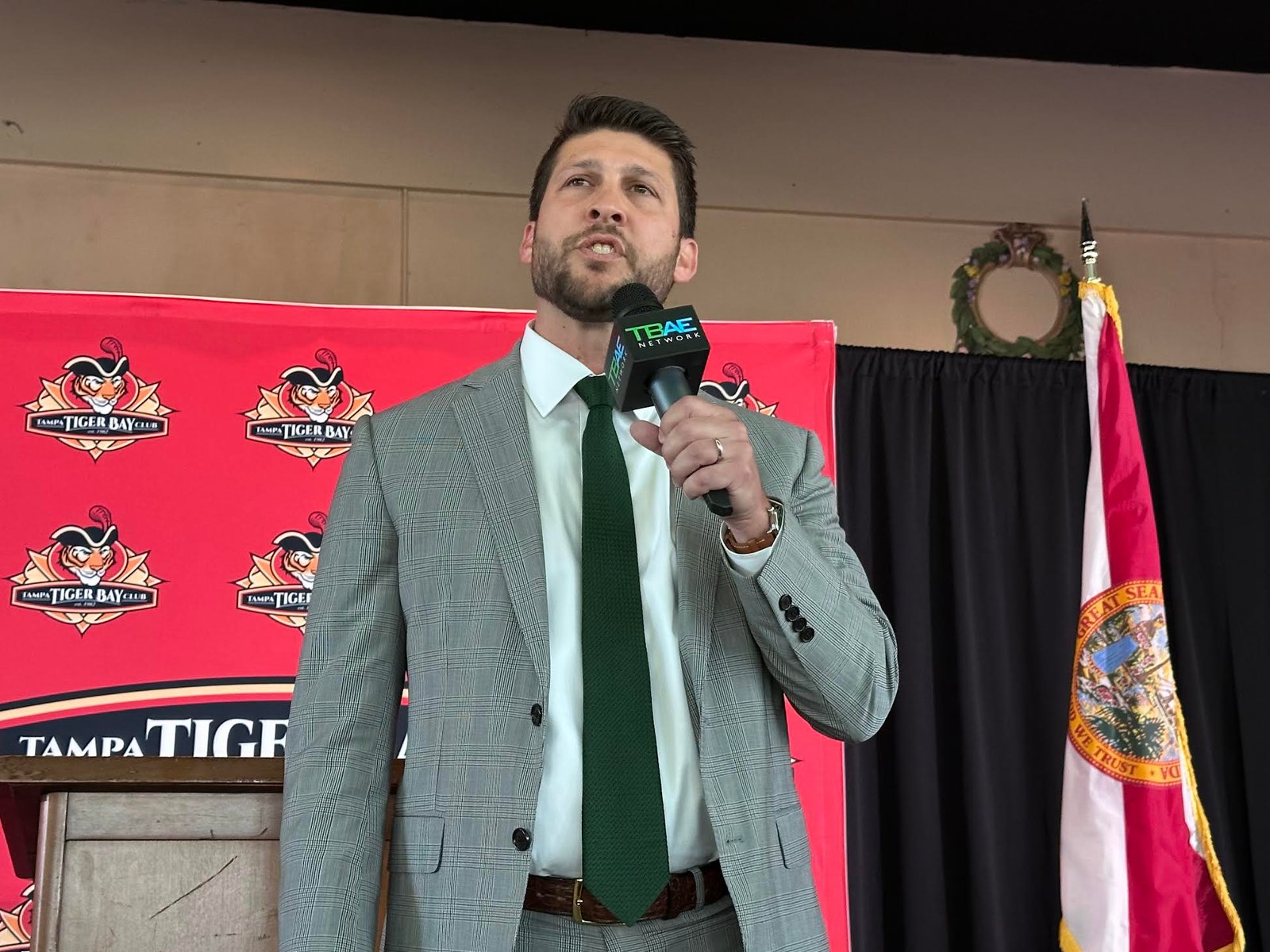
Although Florida Attorney General James Uthmeier, the mind behind the so-called “Alligator Alcatraz” immigration lockup, doesn’t know whether the facility is shutting down for good, he hopes the former airport will become a protected environmental spot.
“Now that the federal government is resourced and standing up its own mission using its own authorities, [the site] is no longer necessary,” Uthmeier told onlookers Monday during a Tampa press conference. “The plan has always been to protect the Everglades and take it back to a protected area where it’s not a commercial business, an airport.”
His office confirmed to the Phoenix that the plan moving forward is “for nothing to be there ever again.”
“Give it back to the Everglades,” said Jeremy Redfern, Uthmeier’s deputy chief of staff. He pointed out that before “Alligator Alcatraz,” the site was simply a 10,000-foot runway, used but by a few pilots learning to fly.
Uthmeier’s remarks came mere hours after CBS News Miami reported that the Everglades facility is permanently shuttering its doors to eventually reopen as a lightly used training airport. All remaining detainees have been transferred to other lockups or deported.
ICE and the Florida Division of Emergency Management (FDEM), the agency in charge of the camp, did not respond to requests for comment.
The attorney general’s comments present a curious dynamic: Although the DeSantis administration has long touted its devotion to the Everglades — pumping $8 billion into preserving the unique swampland and improving its water quality — they ran into an onslaught of environmental lawsuits for their construction of the detention camp.
Groups like the Center for Biological Diversity and Earthjustice have sued for nearly a year seeking to shutter the facility, alleging severe environmental damage. They’ve cited harm to endangered animals, light pollution, and potentially noxious gases being dispersed into the atmosphere.
Environmentalist groups welcomed Uthmeier’s position — but didn’t praise him.
“I’ll believe it when I see it,” Tania Galloni, managing attorney in the Earthjustice Florida regional office, told the Phoenix. “The site absolutely should return to the Everglades, but under leadership that can be trusted to protect the environment.”
“This entire fiasco has shown that AG Uthmeier’s words mean very little — if anything at all — when it comes to Everglades protection,” said Elise Bennett, senior attorney at the Center for Biological Diversity. “We’ll be watching closely, and we’re going to continue using every tool at our disposal to defend and restore Big Cypress and the Everglades until the job’s actually done.
Although the Phoenix was unable to independently confirm whether the center is shutting down for good, evidence has mounted for months that officials were scaling back operations, including reports of dwindling staff and detainee numbers.
On Monday, Uthmeier confirmed that there’d been far fewer detainees day over day.
“I do know that the people that were being brought in for detention, that number was going down — that was always to be expected,” he said. “I think Alligator Alcatraz actually stayed open longer than it was intentionally planned.”
The facility’s apparent shutdown comes less than a year after its July 1 grand opening, marked by a rare side-by-side Trump and DeSantis appearance. Since then, it’s racked up notoriety, over 20,000 detainees, and an at-minimum $1.2 billion tab.
$1 billion+
The Phoenix previously reported that FDEM signed off on $1.01 billion in contracts while spending at least $20 million more on supplies, travel, and food — through February alone. The state still owes vendors at least $600 million for their work on “Alligator Alcatraz” and “Deportation Depot,” a second detention lockup in Baker County.
These dollars have all come out of Florida’s emergency response fund, initially designed to rapidly pay for natural disasters like hurricanes but later molded to include an illegal immigration crackdown. As of Monday, the trust had $25.6 million available — down from $47 million on Thursday.
This comes despite FDEM filing a budget amendment Friday to notify the Legislature that it was spending an additional $18 million out of the trust to pay off immigration invoices incurred between June 2025 and Feb. 17, the day the fund expired. It can’t be used to pay for tabs past that date until DeSantis signs recently passed legislation to recreate the trust.
It’s the only bill the Legislature hasn’t yet sent to his desk.
The federal government has agreed to a $608.4 million reimbursement grant for Florida’s immigration activities on the centers. So far, the administration has received around $58 million.



