
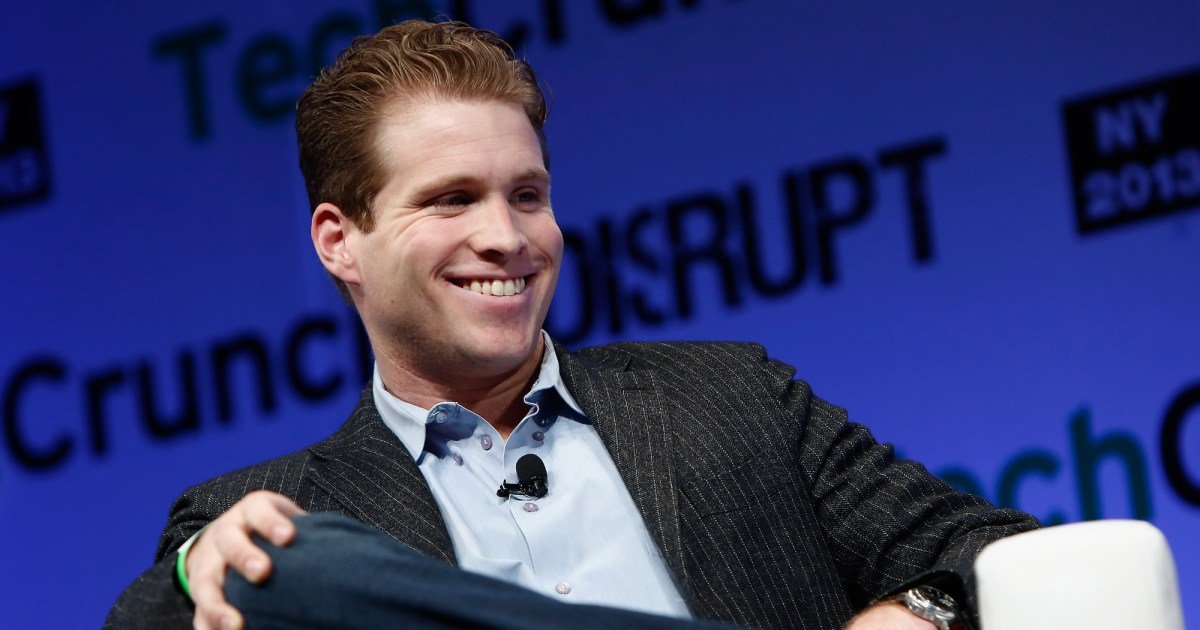
Joe Lonsdale, a billionaire venture capitalist, wants “a brighter future for our urban centers.” Brian Ach/Getty
Joe Lonsdale, co-founder of the weapons-tech company Palantir, is also a major force behind the Trump administration’s policy of pushing unhoused people toward incarceration.
Lonsdale, a longtime critic of “housing first” policy—which proposes that homelessness be solved by supplying those in need of housing with somewhere to live—argues that fining and arresting people for sleeping in public will push them into mental health treatment.
“We’ve made it easier to civilly commit those who are mentally ill and need treatment,” Lonsdale wrote in the New York Post in 2023. “With non-ideological policies rooted in incentives, accountability, and competence, we will show a better way and build a brighter future for our urban centers.”
But there is data to suggest this might not be the right approach. One study of homelessness-criminalization measures in 100 US cities found that the ordinances did not lead to a decrease in the number of people counted as homeless.
“It’s absurd to think that fining people will get them into treatment,” Dr. Margot Kushel, a physician who directs the Benioff Homelessness and Housing Initiative at the University of California, San Francisco, told the New York Times. “Many people are desperate for treatment and can’t get it.” And since Trump cut Medicaid, which finances most of the healthcare options available to unhoused people, “it’s hard not to see the cynicism in this,” she said.
The Cicero Institute, a lobbying group he founded eight years ago, has been instrumental in passing laws criminalizing camping or sleeping in public in 16 states, according to the New York Times. In total, the think tank has worked to pass 241 pieces of legislation in the past 5 years, on issues ranging from education to healthcare. Its c4 arm, Cicero Action, has engaged in lobbying related to military spending and defense contracts, according to the National Homelessness Law Institute. But time and again, Lonsdale and Cicero return to their push to eliminate unhoused people from public life.
That push has now gone federal. In 2024, in a Supreme Court decision called Grants Pass, the court found that camping bans do not violate the Eighth Amendment’s prohibition of cruel and unusual punishment, even if the only available alternative to camping is incarceration of the unhoused. And Trump has now issued an executive order that closely mirrors the Circero Institute’s policies.
Lonsdale’s allies see him as a man of principle. “In some ways he is like a 16th-century knight who was dropped into present day,” Zac Bookman, who co-founded the government database company OpenGov with Lonsdale, told the Washington Post. “There’s this code of honor and duty that he is trying to advance.”
Advocates for unhoused people take a less rosy view, and argue that Lonsdale is putting the 700,000 unsheltered people in the US in danger. “I just can’t imagine having that much wealth and power and using it to kick people when they are down instead of lifting them up,” Jesse Rabinowitz, campaign and communications director at the National Homelessness Law Center, told the Post.
NHLC has sued the Trump administration over its Lonsdale-inspired approach to homelessness.
“I don’t actually think you can separate [Trump’s homelessness policy] from Cicero,” Rabinowitz said. “I think they’re so embedded in this administration, when you look at Trump’s executive order or the HUD funding, it is not a coincidence that it is parroting Cicero.”



