
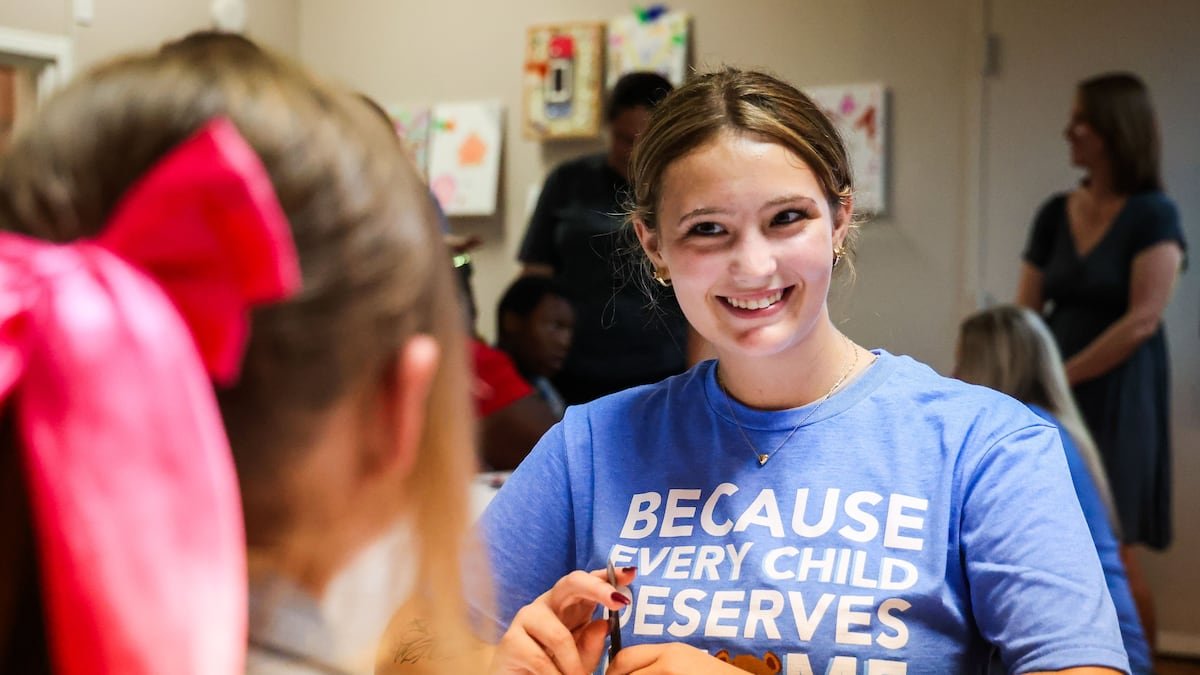
The kids gathered in the gallery at Florida CraftArt, trailed by their therapists and foster parents.
After checking out glowing glass rods and painted teapots, they headed upstairs to make their own art.
A teenage girl looked bored. She’d been to this St. Petersburg studio two years ago. Now, her guardian said, she needed to update her picture. The youngest boy wrapped his arms around his foster mom’s knees.
“We do art because it represents ourselves,” instructor Vyolette Hastings, 22, told them. “Think of something that shows who you are.”
Hastings was eager to share her story — and her art — with the kids.
She knew that what they were about to make could be life-changing.
New law, new tactics
Photos of kids in foster care used to be featured on websites, at churches and malls — so prospective parents would fall in love with those faces.
But two years ago, Florida became the first state to prohibit foster children from being seen by unvetted strangers, as a way to protect the kids’ privacy.
The new rule meant adoption advocates had to change tactics. Photographers for the Tampa Heart Gallery now take pictures of kids hidden behind baseballs and books.
In Pinellas and Pasco, children create “Heart Art.”
Every week, Hastings leads a new group of kids at the downtown art gallery.
Trash bags and butterflies
They spread out around long tables rimmed with markers, pipe cleaners and pom-poms — four foster kids, ages 5 to 16.
Hastings clicked a slide onto a screen — the art she had created: Seven shades of purple yarn glued onto construction paper, forming a wrinkly garbage bag.
“When I was growing up in foster care, I never had a home. Every time I moved, I had to pack up all my stuff in trash bags,” Hastings told the kids. “That doesn’t define me now. But it’s part of me.”
The teenager’s eyes widened. Konrad, the 5-year-old, looked up at his foster mom. “I want to draw a house,” he said softly. “Our house.”
Derek and Lisa Wilkes had taken in the boy in February. He had been in foster care since he was a month old, suffering from two traumatic brain injuries. In five years, he had lived in six homes.
The couple adored him but didn’t plan to adopt him. “All these kids in the system have experienced so much trauma and abuse,” said Lisa Wilkes, 42. “But in five months with Konrad, we’ve already seen so much progress. He’s not afraid of the shower any more. And he snuggles with our German Shepherd.”
“I want to draw a dog,” Konrad told her. “Our dog. And write Daddy.”
Hastings passed out sandpaper and white T-shirts and told them to use crayons. “Draw whatever you want to on the sandpaper, and I’ll iron it onto your shirt,” she told the kids.
A Heart Gallery photographer would take pictures of their creations and post them on the website, along with each child’s first name, age and a brief bio.
“Konrad’s friendly and outgoing personality shines,” says his profile. He likes soccer and swimming, hide-and-seek, dinosaurs and trucks. His favorite food is bread.

Allyson, the teenager, “finds joy in arts and crafts, drawing and reading,” her bio says. She likes “attending church and listening to country music (especially Morgan Wallen!)” Someday, she wants to go to Los Angeles.
Allyson’s last “Heart Art” featured a pink camouflage collage and the phrase “Never give up.”
Now she wanted to draw flowers, for friendship. And butterflies, for her mom.
“That was her favorite thing,” said Allyson, who was 10 when her mom died and she went into foster care.
She sketched a blue butterfly. Then erased it and tried again.
‘It’s about sharing their stories’
Hastings has worked at the gallery for a year, helping up to a dozen kids at a time.
Some can’t talk. Others can’t hold a crayon. She asks them questions, helps them draw, encourages them to create whatever makes them happy.
Demoni, 13, loves pizza. So his aide drew a slice beside his name.
Serenity, 12, didn’t want to color. So her foster mom wrote “Princess” in silver script above a crown.
“It’s about sharing their stories,” Hastings said. “Art makes that a lot easier.”
Hastings was 6 when police came to her house in the middle of the night — on July 4 — and took her and her younger brother away. Her parents both struggled with addiction. Her brother, who has special needs, had slipped out and wandered away.
She moved from an emergency group home to strangers’ houses — so many she didn’t want to count. “I was always searching for a sense of belonging,” she said. “I couldn’t connect, because I thought no one understood.”
When Hastings was 12, her grandmother adopted her.
She graduated from Gibbs High’s visual arts magnet program, then enrolled at St. Petersburg College, where she earned an associate’s degree, and is studying for her four-year diploma. She still sees her brother, who lives in a group home.
Working with foster kids, she said, means she gets paid to create art. And families.
The job also has answered the question that plagued her for years: Why did this happen to me?
“I used to feel like I lost six years of my life. But now I see it,” she said, scanning the room of kids coloring.
“Being in foster care set me on this path. It doesn’t make me upset or angry anymore. Because it made me who I am.”



