
This is an edition of The Atlantic Daily, a newsletter that guides you through the biggest stories of the day, helps you discover new ideas, and recommends the best in culture. Sign up for it here.
One of the few issues that unites voters and politicians of both parties right now is data centers. Three-quarters of Americans would oppose a data center being built near where they live, according to a new poll released last week by Heatmap Pro and Embold Research. The two leading lights of the left, Representative Alexandria Ocasio-Cortez and Senator Bernie Sanders, have sponsored a bill in Congress to create a temporary moratorium on new centers. They have an unlikely ally in archconservative Governor Greg Abbott of Texas, who said yesterday on ABC’s This Week that data-center companies “basically dug their own grave” and “got the backlash they deserve.”
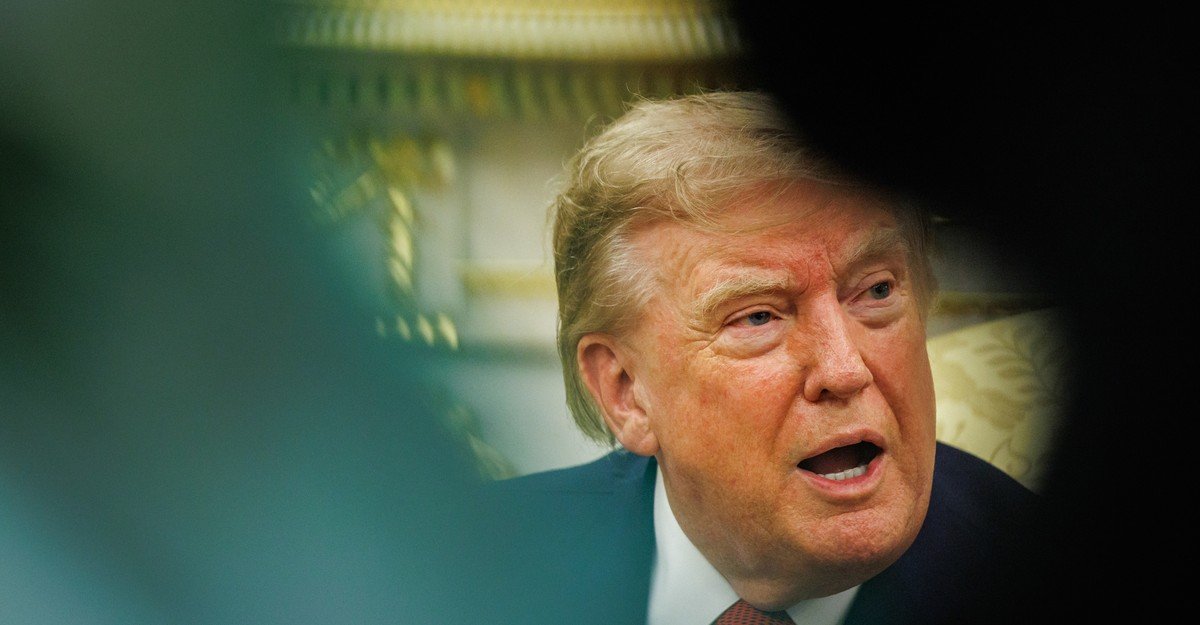
Standing against this consensus is Donald Trump. The president remains a big booster of data centers. “Communities that don’t take a data center—they’re making a mistake,” he said Thursday during an interview with his on-again, off-again lackey Michael Cohen. “Data centers throw off tremendous amounts of jobs and money.”
This was no one-off. Trump had made several similar comments recently. “If I were the mayor of a town or the governor of a state and I had a chance to get a big plant in, an AI plant or a data center, I would absolutely want it, because the jobs are enormous and the money paid, the taxes paid, are just enormous,” Trump said last week—although he allowed that the sector could use “a little public-relations help.”
This puts Trump, the most successful demagogue in American political history, in the unusual position of misreading, and opposing, a populist groundswell. During his 2016 presidential campaign, Trump took many stands that were unpopular among establishment politicians. Some of these positions put him at odds not only with Democrats but also with most Republican elected officials. Trump broke with Republicans in claiming that he would protect social-welfare programs such as Medicare and Social Security, and he broke a bipartisan consensus by attacking free-trade agreements and promising protectionism. On these matters (as well as on his willingness to encourage and participate in gutter racism), Trump demonstrated that a big constituency existed for views that other politicians had deemed electoral liabilities.
Data centers’ political arc has been different. Initially, many officials seemed to back the centers, following exactly Trump’s logic: They offered jobs and tax benefits. But as public opinion turned—driven by a mix of backlash to AI in general, environmental concerns, worries about energy prices, and old-fashioned NIMBYism—politicians changed their view as well.
Why has Trump missed the shift? Presumably one reason is that he is surrounded by advisers and tech executives such as David Sacks and Larry Ellison, who are major boosters of and players in the industry. Tech companies invested heavily in Trump at the start of his second administration, lavishing him with gifts, including a gold-plated bauble and donations to projects such as his inauguration and his ballroom, and Trump has reciprocated by taking policy stances that benefit them. Trump may also be personally profiting from the AI boom; his financial disclosures show he’s become more of a tech investor.
Trump has always tended to adopt the latest thing he’s heard, no matter what it is. He has been willing to alienate corporate interests in the past—when he saw some political upside. But he is not hearing from voters who might alert him to how unpopular data centers are. Trump’s rallies and speeches once created a feedback loop in which he conveyed his message to voters and—crucially—they conveyed their thoughts to him. Now, as his energy sinks, his travel schedule gets lighter, and security makes events more challenging, Trump is getting out less.
Though his stump speeches dragged on for hours, Trump was carefully attuned to audience attention and what did and didn’t work. “You know, if it gets a little boring, if I see people starting to sort of, maybe thinking about leaving, I can sort of tell the audience, I just say, ‘We will build the wall!’ and they go nuts,” he told The New York Times in 2016. I think often about a speech Trump delivered in July 2022. It was billed as the launch of a new policy agenda, but as he read it, both Trump and his audience seemed bored. Then he ad-libbed a riff about trans athletes and the crowd came alive. Trump picked up on the shift and emphasized it; trans issues would become a central talking point for his 2024 campaign.
The president has always been susceptible to fake news and bad at filtering information, but rallies provided a gut check about his base, if not about the broader national reality. Now Trump isn’t even receiving that kind of information. One of his major conduits for information is Natalie Harp, a sycophantic aide who isn’t interested in exposing Trump to criticism. He could read public-opinion data, but as his own approval sinks, he has taken to saying (and may well believe) that polls are fake.
As his world shrinks, Trump’s populist touch has faded. Despite being elected twice on an antiwar platform, he’s launched attacks on Venezuela and Iran. As the Iran war has gotten bogged down, he’s been incapable of reading the public mood. He has dismissed voter frustration over rising fuel costs, saying “I don’t even think about” gas; he previously called affordability a “hoax.” In response to reports that American sailors aboard the USS Abraham Lincoln were struggling with a long deployment, Trump said they hadn’t been deployed “nearly long enough.” And the collapse of trade talks with Canada on Friday threaten Republican prospects in border states including Michigan and Ohio.
Each of these cases represents a growing gap between Trump and his base, but none is as ironic as Trump’s stance on data centers. The AI facilities store terabytes of data, but the president can’t get access to the information about them that he needs.
Related:
Here are four new stories from The Atlantic:
Today’s News
- The Supreme Court allowed the Trump administration to move forward for now with plans to restrict mail-in voting, including directing the Postal Service to help determine which voters receive mail ballots. The ruling is preliminary and allows implementation to proceed while a lower court considers the legality of President Trump’s executive order.
- Trump said that the United States will impose 50 percent tariffs on Canadian cars, trucks, auto parts, and steel beginning January 1, 2027. The announcement followed Canada’s decision to impose retaliatory tariffs on U.S. products after U.S.-Canada trade talks ended without an agreement over the weekend.
- Treasury Secretary Scott Bessent announced an “economic D-Day” for Iran, stating that the U.S. will impose new sanctions on more than 60 entities, individuals, and vessels tied to Iran’s nuclear and missile programs; additional sanctions are planned in the coming weeks.
Dispatches
Explore all of our newsletters here.
Evening Read
The Trump Comedians Are Tired
By Will Gottsegen
In 2017, as Donald Trump was getting used to the White House furniture, Alec Baldwin was feeling exultant. His impersonation of the new president on Saturday Night Live had made him momentarily inescapable and given the comedy show its highest ratings in years. To capitalize on the momentum, Baldwin co-authored a book-length satirical memoir written from Trump’s perspective. Baldwin’s autobiography—which also came out that year and was excerpted as a cover story for Vanity Fair—noted that his take on the president “seemed to delight nearly everyone in the People’s Republic of Manhattan.” When he accepted an Emmy for his performance in the fall, he addressed Trump directly: “At long last, Mr. President, here is your Emmy.”
It was disorienting, then, to hear Baldwin declare, when I spoke with him earlier this summer, that this sort of comedy has become stale, boring, and useless. “None of it’s funny. I don’t find it funny anymore,” he told me. “There’s nothing left to say about Trump.”
Read the full article.
More From The Atlantic
Culture Break
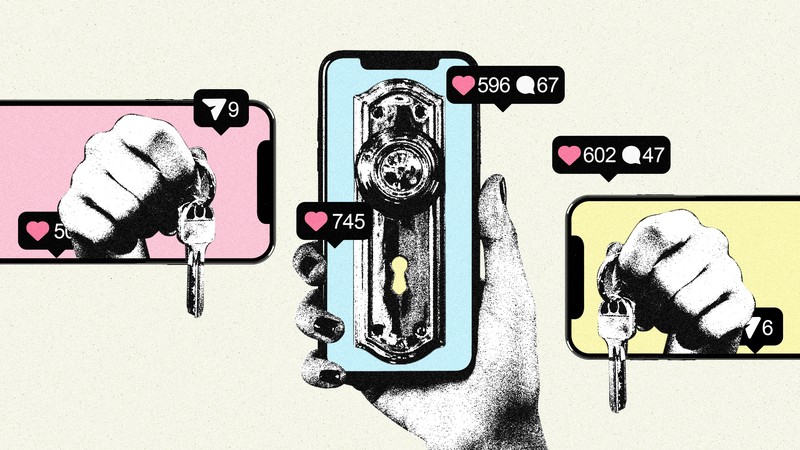
Explore. So a C-list celebrity is selling your house? Michael Waters writes about how reality-TV stars and influencers are getting into real estate.
Debate. Other Freedom 250 events this summer felt like Trump rallies. But the Grand Prix in Washington, D.C., this weekend actually worked, Kelsey Ables argues.
Play our daily crossword.
Rafaela Jinich contributed to this newsletter.
When you buy a book using a link in this newsletter, we receive a commission. Thank you for supporting The Atlantic.



