
Welcome back to World Brief, where we’re looking at the next phase of the U.S.-Iran war, Taiwan’s long-standing friendship with Eswatini, and crucial state elections in India.
Strained Truce
Fighting flared across the Persian Gulf on Monday, as U.S. and Iranian strikes linked to the start of “Project Freedom” threatened to upend the two countries’ already fragile cease-fire.
Welcome back to World Brief, where we’re looking at the next phase of the U.S.-Iran war, Taiwan’s long-standing friendship with Eswatini, and crucial state elections in India.
Strained Truce
Fighting flared across the Persian Gulf on Monday, as U.S. and Iranian strikes linked to the start of “Project Freedom” threatened to upend the two countries’ already fragile cease-fire.
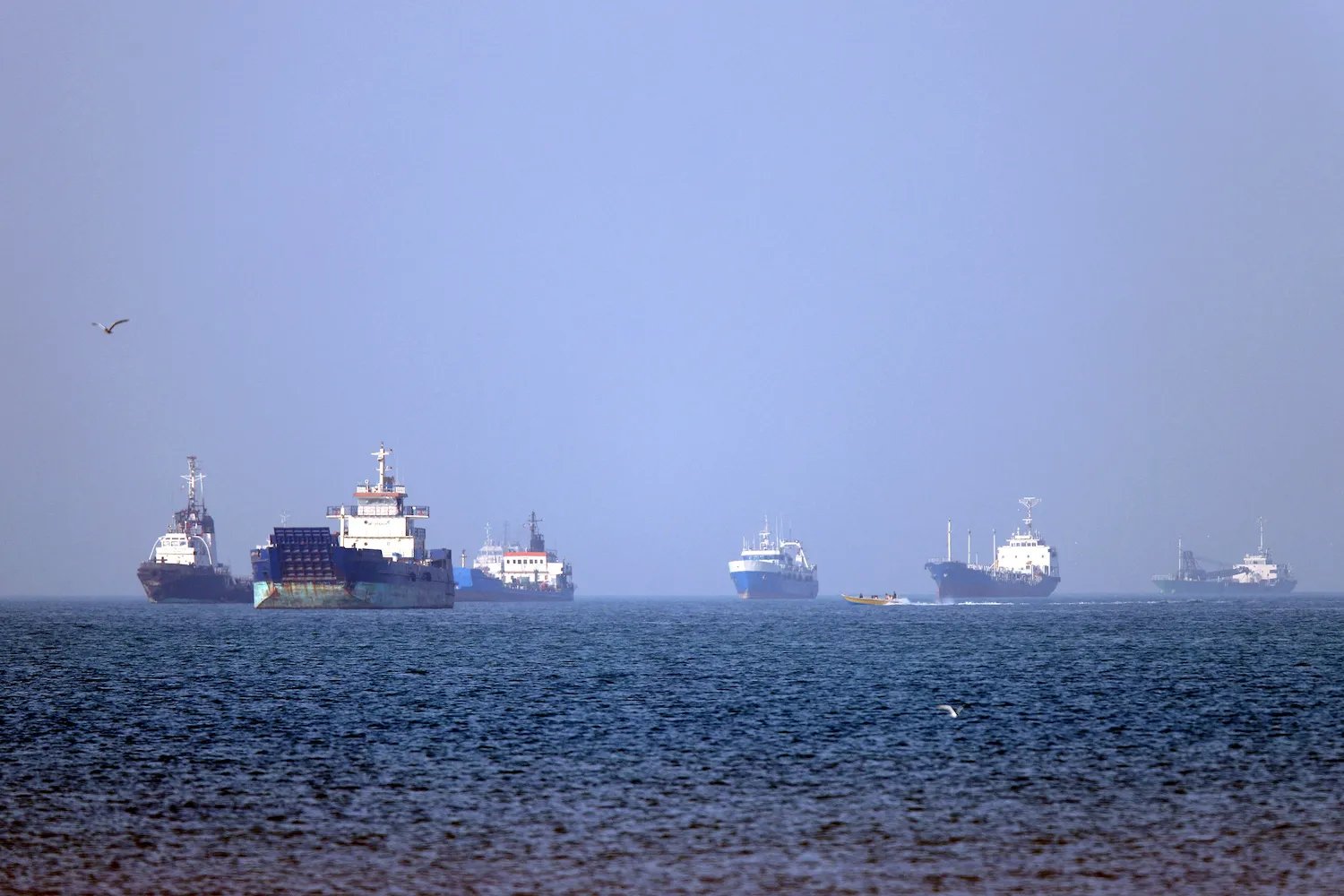
According to U.S. Central Command, the new U.S. operation—which took effect on Monday—aims to restore freedom of navigation for commercial shipping through the Strait of Hormuz. To accomplish this, the U.S. military plans to use guided-missile destroyers, more than 100 land- and sea-based aircraft, multidomain unmanned platforms, and some 15,000 service members to “guide” commercial vessels through the strategic waterway.
By declaring a new campaign from Operation Epic Fury, the Trump administration sidesteps a 60-day deadline that expired on Friday to end the fighting in Iran. And while the U.S. military insists that Project Freedom is a “defensive mission,” U.S. President Donald Trump told Fox News on Monday that Iran will be “blown off the face of the Earth” if it attacks U.S. forces escorting ships through Hormuz.
The White House’s warning comes after U.S. Navy warships shot down several Iranian cruise missiles and drones targeting vessels in the strait, according to Centcom commander Adm. Brad Cooper. U.S. Army Apache helicopter gunships also destroyed six Iranian military speedboats that reportedly threatened Project Freedom, Cooper said. A senior Iranian official denied these claims.
The U.S. military also claimed that two U.S.-flagged merchant ships had successfully transited the Strait of Hormuz. Tehran denied such crossings on Monday and instead said that Iranian missiles had struck a U.S. vessel that was “violating maritime security and navigation norms,” forcing the ship to turn back.
“We warn that any foreign military force—especially the aggressive U.S. military—that intends to approach or enter the Strait of Hormuz will be targeted,” Iranian Maj. Gen. Ali Abdollahi told state media on Monday.
Yet, according to Centcom, “No U.S. Navy ships have been struck.”
U.S.-protected commercial vessels in the Strait of Hormuz are not Tehran’s only targets. On Monday, Iranian forces fired four cruise missiles at the United Arab Emirates, three of which were intercepted and one of which fell into the sea, according to the UAE defense ministry. Authorities in the eastern emirate of Fujairah also said that an Iranian drone strike ignited a fire at a key oil facility that the UAE has used to avoid shipping some of its crude through the strait. And a South Korean-operated ship anchored in the strait off the UAE’s coast was hit by an explosion.
These were Tehran’s first attacks on the UAE since the U.S.-Iran cease-fire went into effect last month, and they appear to be in direct response to Trump’s latest efforts to reopen Hormuz.
Today’s Most Read
The World This Week
Tuesday, May 5: Romania’s parliament votes on a motion to censure Prime Minister Ilie Bolojan.
German Chancellor Friedrich Merz hosts Portuguese Prime Minister Luís Montenegro.
Japanese Prime Minister Sanae Takaichi concludes a three-day trip to Australia.
Wednesday, May 6: G-7 trade ministers convene in Paris.
The World Trade Organization begins a two-day General Council meeting.
The Philippines hosts the two-day Association of Southeast Asian Nations summit.
Thursday, May 7: Scotland and Wales hold parliamentary elections while local elections take place across England.
Italian Prime Minister Giorgia Meloni hosts Polish Prime Minister Donald Tusk.
Friday, May 8: Populist Laura Fernández is sworn in as Costa Rica’s new president.
Monday, May 11: Kenyan President William Ruto and French President Emmanuel Macron co-host the two-day Africa Forward summit in Nairobi.
What We’re Following
Secret diplomatic mission. Taiwanese President Lai Ching-te concluded a surprise trip to Eswatini on Monday that aimed to defy China’s influence efforts in Africa. Lai’s trip had originally been scheduled for April, but it was postponed after three African countries refused to let the Taiwanese leader’s plane fly through their airspaces, earning praise from Beijing. Eswatini is one of just 12 nations—and the only one in Africa—that has diplomatic relations with Taiwan.
Taiwan “will never be deterred by external pressures,” Lai wrote on X on Saturday in a post lauding the two countries’ long-standing friendship. “Our resolve & commitment are underpinned by the understanding that Taiwan will continue to engage with the world—no matter the challenges faced.”
A Chinese foreign ministry spokesperson dismissed Lai’s weekend visit as a “laughable stunt,” referring to Lai as having been “smuggled” out of Taiwan. “We urge Eswatini and some other individual countries to see where the arc of history bends and stop serving as the prop of ‘Taiwan independence’ separatists,” the ministry added. According to Lai, secret arrangements by his national security and diplomatic teams made the trip possible.
Big BJP victory. The party of Indian Prime Minister Narendra Modi looked set to win two of four crucial state elections on Monday: Assam and West Bengal. Taking power in these two states—the latter of which Modi’s Bharatiya Janata Party (BJP) has never ruled—signals the Modi administration’s expanding influence amid the opposition INDIA alliance’s weakening position.
The BJP campaigned extensively in West Bengal in the weeks leading up to the election. Voters in both states, which border Bangladesh, have expressed particular concern with undocumented migration into India. Modi’s party has sought to capitalize on this sentiment by pledging to crack down on so-called illegal infiltration. The BJP also criticized West Bengal’s weak economy under incumbent Chief Minister Mamata Banerjee.
During India’s 2024 election, the opposition alliance prevented Modi from securing an outright majority in parliament, forcing the BJP to form a coalition government. Monday’s losses, though, are expected to significantly strengthen Modi’s efforts to secure a fourth term come elections in 2029.
Pulling out troops. The German defense ministry said on Monday that the United States has not necessarily canceled a plan to deploy a battalion with long-range Tomahawk missiles to Germany. “We’re not talking about a definitive cancellation,” a ministry spokesperson said, adding that the weapons were “meant to be stationed (in Germany) and may well still be.” The deal, devised under the Biden administration, was thrown into doubt when the Pentagon announced on Friday that it will withdraw roughly 5,000 troops from Germany.
Trump has repeatedly criticized the United States’ relationship with its NATO allies, accusing European members of placing too heavy of a defense burden on Washington. In recent weeks, the White House’s ire has grown due to some members’ hesitance or outright refusal to aid U.S. forces in the Iran war or allow U.S. troops to use European bases to launch attacks on Iran.
As of December 2025, the United States had around 68,000 active-duty troops in Europe, more than 36,000 of whom were stationed in Germany. “We’re going to cut way down, and we’re cutting a lot further than 5,000,” Trump told reporters on Saturday. So far, Germany appears to be downplaying the moves, with German Defense Minister Boris Pistorius telling local media on Saturday that the troop reduction was expected. However, Pistorius also argued that “the presence of American soldiers in Europe, and especially in Germany, is in our interest and in the interest of the U.S.”
Odds and Ends
South Korea is trying to promote the importance of sleep with its third annual power nap contest. Nearly 200 attendees dressed as sleeping beauties or princes gathered in Seoul on Saturday to compete for best short-term sleeper. Judges ranked based on how well contestants could stay asleep during two types of interruptions: being tickled with a feather or hearing mosquito sounds. FP’s World Brief writer believes that she would absolutely crush this competition and humbly asks her editor to let her spend all day “practicing.”



