
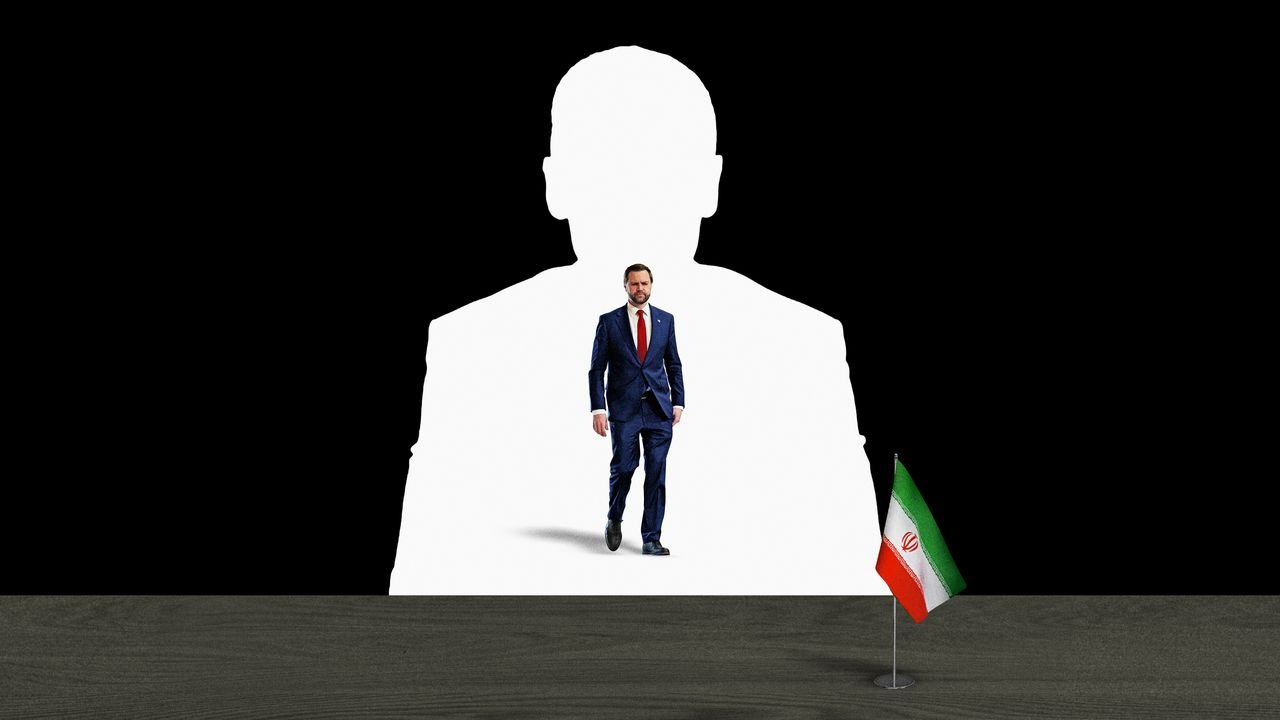
The seventy-two-year-old Zolghadr spent much of his career climbing the ranks of the I.R.G.C., eventually becoming its deputy commander. He has also taken on a number of high-level political, judicial, and security roles in the regime. Zolghadr played a central role in the regime’s strategies for cracking down on anti-government demonstrations, including in the 2009 Green Movement protests. In 2007, the U.N. Security Council sanctioned him for his role in advancing Iran’s missile programs, and in 2023, the U.K. sanctioned him for involvement in “nuclear activity.” In his current role, he succeeded Ali Larijani, who was killed in an Israeli air strike. Larijani oversaw the bloody repression of protesters in January but was widely seen as a pragmatist, and more moderate than Zolghadr. His appointment is “more proof of hardline military aka IRGC consolidation,” Behnam Ben Taleblu, an Iran expert at the hawkish Foundation for Defense of Democracies, wrote in a post on X, adding that there can be no doubt “that the war expedited and accelerated the ongoing trend of increasing IRGC control of the country.”
Vahidi, who is sixty-seven, is the newly appointed head of the I.R.G.C. Both of Vahidi’s predecessors were killed by Israeli air strikes—the first was killed last summer, the second in the latest fighting—and he took over the role in early March. A former commander of the Quds Force, the special-forces unit of the I.R.G.C., Vahidi played a foundational role in building up Iran’s asymmetric warfare and intelligence operations after the Iran-Iraq War. Vahidi has also served as Iran’s defense minister and interior minister. An arrest warrant was issued for him in Argentina, for his alleged role in the 1994 bombing of a Jewish community center in Buenos Aires which killed eighty-five people. Iran has denied involvement. Vahidi was sanctioned by the United States and the European Union for human-rights violations for his role overseeing security forces that violently suppressed nationwide protests, killing hundreds, following the 2022 death of Mahsa Amini. (Amini, a twenty-two-year-old student, was arrested for not wearing a hijab, or head scarf, properly, and she died in police custody.) Mohammad Ali Shabani, the editor of Amwaj, a U.K.-based news outlet covering the Middle East, wrote in a post on X that Vahidi’s predecessors as head of the I.R.G.C. were “schoolteachers compared to this guy. The man is brutal. Hardliners wasting no time filling vacancies thanks to Israel.”
Other influential hard-liners include Chief Justice Gholam-Hossein Mohseni-Eje’i and the national police chief, Ahmad-Reza Radan. Both were instrumental in the deadly suppression of protesters in December and January, and they have continued to order arrests, executions, and large deployments of the Basij forces to intimidate Iranians and prevent dissent. “For the foreseeable future, Iran is going to remain a very repressive state and probably become even more dangerous to its own people than it has been for the preceding decades,” Maloney told me.
Then there is Mojtaba Khamenei, the fifty-six-year-old son of Ali Khamenei, and his successor as Ayatollah. Under normal circumstances, Mojtaba’s position as Ayatollah would make him Iran’s most powerful religious, political, and military leader. But the younger Khamenei hasn’t been seen in public or photographed since the war began. He reportedly suffered severe injuries in the Israeli air strike that killed his father. What’s clear is that Mojtaba has strong ties to the I.R.G.C. As a teen-ager, during the Iran-Iraq War, he served in the group’s Habib Battalion, and he has maintained close links to its leaders since, including as a part of the “Habib Circle,” an alumni group comprised of influential I.R.G.C. hard-liners. Before this year, Mojtaba was relatively unknown, working in the shadows of his father’s office. He had never held public office or given religious or political speeches. Few photos or videos of him exist. Yet he wielded influence. In the late two-thousands, American diplomatic cables, published by WikiLeaks, described him as “the power behind the robes” and someone who was a “capable and forceful” personality inside the regime. He’s considered more ideologically extreme than his father. He has backed regime hard-liners over reformists and reportedly approved the crackdowns on the Green Movement protests. A 2008 cable reported that he “has long maintained a close relationship” with the then Tehran mayor Ghalibaf, adding that “Mojtaba is close to and well briefed by IRGC senior leaders,” in particular Zolghadr. His father, though, was opposed to hereditary succession and rejected the idea of Mojtaba as his replacement. But I.R.G.C. generals have elevated Mojtaba to become Ayatollah anyway, despite his limited religious credentials, forcing out more moderate candidates and leaving him in their debt. “It is a theocracy now only in name. In practice, it is a military system. At the end of the day, power really is in the hands of the Revolutionary Guards,” Vaez told me. “When Trump says, ‘I’ve changed the regime,’ he hasn’t really changed the regime, but he has transformed it, in the sense that the power dynamic between the Supreme Leader and the Revolutionary Guards has changed. They were subservient to him. Now he is subservient to them.”



