
Recipe Highlights
Growing up in Yokohama, cold noodle dishes were a household staple through the hot, humid summers. My mom served Zaru Udon (Cold Udon with Dipping Sauce) on the warmest days—thick noodles straight from the ice bath, a cup of cold dipping sauce on the side. It was the simplest meal—and somehow the only dish that sounded good when the heat suppressed your appetite.
I still make it the same way today, and the only real decision is whether to make the dipping sauce from scratch or use a bottled mentsuyu as a shortcut.
Here’s why I keep coming back to this recipe:
- Ready in 15 minutes, start to finish
- Cool, savory, and light—perfect when you don’t have much appetite on a sweltering day
- Dipping sauce two ways: from scratch or quick with bottled mentsuyu
If you love udon, try my Udon Noodle Soup, Beef Udon, and Yaki Udon (Stir-Fried Udon Noodles) next!

What is Zaru Udon (Cold Udon)?
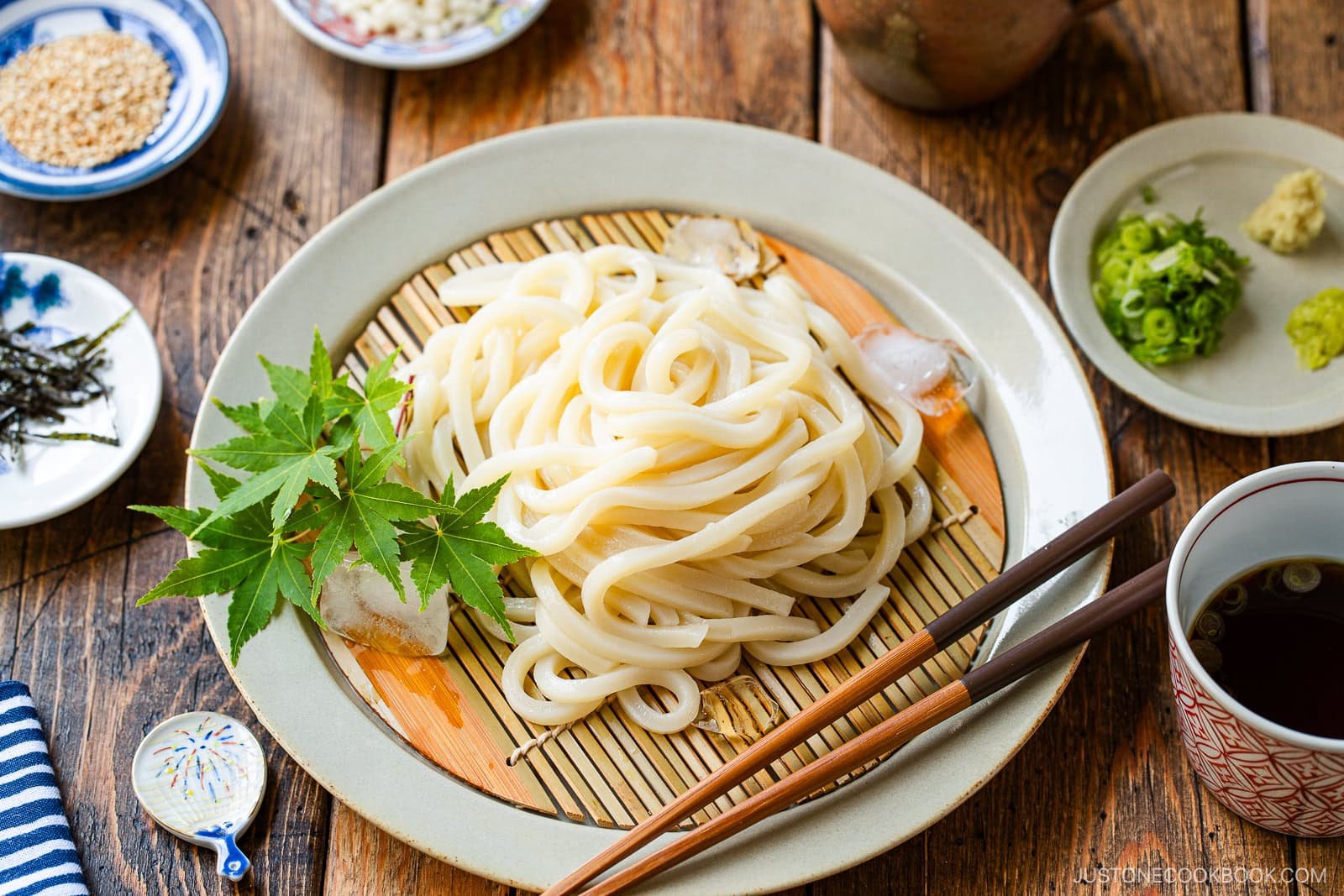
Zaru udon (ざるうどん) is a Japanese cold noodle dish that takes its name from the zaru (bamboo strainer) traditionally used to drain and serve the noodles.
It originated as a way to beat the heat during Japan’s hot and humid summers, when appetite fades and cool food feels essential. Along with Zaru Soba, zaru udon remains one of the most popular warm-weather meals in Japanese homes and restaurants alike.
Ingredients for Zaru Udon (Cold Udon)
- udon noodles – frozen, parboiled, or dried
- green onion/scallion
- fresh ginger
- wasabi – optional
- For the dipping sauce (tsuyu) – or use bottled mentsuyu for a shortcut (see Tips)
Find the printable recipe with measurements below.
How to Make Cold Udon with Dipping Sauce
- Make the dipping sauce. Simmer dashi, mirin, and sugar in a small saucepan over medium heat until the sugar dissolves. Add soy sauce, bring back to a simmer, then remove from heat. Transfer to a pitcher and cool completely in a bowl of ice water.
- Cook the noodles. Bring a large pot of water to a boil. Add frozen noodles straight from the freezer and boil for 1 minute until heated through. For dried noodles, follow the package directions.
- Rinse and chill. Drain the noodles and rinse off excess starch under cold running water. Transfer to a bowl of ice water for 30–60 seconds, then drain.
- Prep the condiments. Thinly slice the green onion, and peel and finely grate the ginger. Arrange them on small plates alongside wasabi, if using.
- Assemble and serve. Divide the drained noodles onto individual plates alongside a few ice cubes. Pour the cooled tsuyu into dipping cups. Stir condiments into your sauce, dip the noodles, and enjoy.


Variations
Here are a few easy ways to make this dish your own.
- Extra toppings. Shredded nori, tenkasu (tempura scraps), julienned shiso, and toasted white sesame seeds all make great toppoings for zaru udon.
- Cold Tanuki Udon. Add tenkasu, sliced tomato, cucumber, wakame seaweed, and a soft-boiled egg for a more substantial bowl.
- Cold Natto Udon. Top with fermented soybeans for a satisfying neba neba (ネバネバ, pleasantly sticky) texture—a beloved combination for natto lovers.
- Cold Curry Udon. Ladle chilled curry soup over the noodles with sliced pork and seasonal vegetables for a heartier cold noodle bowl.
- Vegan option. Swap the dashi for Vegan Dashi and skip the bonito flakes in the quick sauce. Everything else stays the same.
- Fresh noodles from scratch. There’s nothing like slurping Homemade Udon Noodles. The texture is far superior to store-bought and well worth the effort—it’s easy and fun to make by hand.
What to Serve with Cold Udon
Zaru Udon pairs well with light, summery sides. Here are my picks:
- Tempura – The classic pairing—cold noodles served alongside crispy vegetable or shrimp tempura—is called tenzaru udon (天ざるうどん). Read How to Make the Best Tempura for the batter and technique.
- Green salad with Carrot Ginger Dressing– A light, refreshing side that balances the savory dipping sauce.
- Mugicha (Japanese barley tea) – Chilled barley tea is the quintessential Japanese summer drink—earthy, caffeine-free, and beloved by kids and adults.


Storage Tips
To store the dipping sauce, transfer leftover sauce to a clean, airtight container and refrigerate for up to a week. Cook the udon noodles just before serving—cooked noodles don’t hold well in the fridge.
FAQ
What is the difference between zaru udon and zaru soba?
Both are cold Japanese noodle dishes served with mentsuyu dipping sauce. Zaru soba uses buckwheat noodles, which have an earthy, slightly nutty flavor. Zaru udon uses thick wheat noodles with a chewy, neutral bite. The preparation and dipping sauce are nearly identical—it comes down to personal preference and which noodles you have on hand.
Can I use dried udon instead of frozen?
Yes. Shelf-stable dried udon noodles or vacuum-packed fresh udon noodles work fine—cook them according to the package directions, then rinse and chill the same way. For the dried noodles, the texture will be slightly thinner and less chewy than frozen Sanuki-style udon, but the flavor holds up well.
What is mentsuyu, and where can I buy it?
Mentsuyu is a concentrated Japanese noodle soup base made from dashi, soy sauce, mirin, and sugar. You dilute it with water before serving—dilution ratios vary by brand, so read the label. Look for it at Japanese grocery stores or order it online. If you prefer homemade, my tsuyu recipe in this post takes only a few minutes.
Can I make zaru udon ahead of time?
Make the dipping sauce up to a week ahead and keep it refrigerated. Cook the udon noodles just before serving—chilled cooked noodles clump together and lose their texture overnight.
I’d love to hear how yours turned out! 💛 Please leave a star rating and comment below to share your experience. Your feedback not only supports Just One Cookbook but also helps other home cooks discover recipes they can trust.
Zaru Udon (Cold Udon with Dipping Sauce)
For the Dipping Sauce (Tsuyu)
For the Classic Condiments
- Gather all the ingredients. This recipe makes homemade dipping sauce. To make a quick dipping sauce using bottled mentsuyu (concentrated noodle soup base), see my recipe Notes at the end.
To Make the Dipping Sauce (Tsuyu)
Add ⅔ cup dashi (Japanese soup stock), 2 Tbsp mirin, and 1 tsp sugar to a small saucepan. Bring to a simmer over medium heat, stirring until the sugar dissolves.
- Add 2 Tbsp soy sauce. Bring it back to a simmer, then turn off the heat. Transfer to a heat-resistant container or serving pitcher and set in a bowl of ice to cool. This dipping sauce is ready to use; no need to dilute.Nami’s Tip: Make it ahead and keep it in the fridge until ready to use (up to 1 week).
To Prepare the Noodles
- Bring a large pot of water to a boil. Add 2 servings udon noodles (no need to defrost from frozen) and boil for 1 minute to heat through. Nami’s Tip: I use my favorite frozen Sanuki udon from the Japanese market. Shelf-stable dried udon noodles or vacuum-packed fresh udon noodles are good alternatives; cook according to package directions.
Drain in a sieve. Thoroughly rinse off excess starch under running water using your hand until the noodles are no longer slippery. Place them in an ice bath to chill for 30–60 seconds—any longer and the noodles will become too firm.
To Prepare the Condiments
Cut 1 green onion/scallion into thin slices. Peel and grate ½ inch ginger. Divide the sliced green onion, grated ginger, and wasabi onto small individual plates.
When I’m short on time, I make this quick tsuyu using store-bought mentsuyu:
- Add ½ cup bottled mentsuyu (concentrated noodle soup base), 1 piece kombu (dried kelp), and ½ cup katsuobushi (dried bonito flakes) to a measuring cup or container.
- Steep it in the fridge for at least 10 minutes (or up to overnight for more flavor).
- Strain through a sieve into a pitcher or other container.
- Add 1½ cups water * to dilute. Serve into individual dipping cups.
* The bottled mentsuyu I use is concentrated 3 times for cold noodle dipping sauce (“men no tsuketsuyu”), so I dilute it with three parts water (1:3). Follow your bottle’s instructions, as each brand is different. If you have “straight” mentsuyu, you don’t need to dilute it.
Variations
Here are a few easy ways to make this dish your own.
- Extra toppings. Shredded nori, tenkasu (tempura scraps), julienned shiso, and toasted sesame seeds all work well on zaru udon.
- Cold Tanuki Udon. Add tenkasu, sliced tomato, cucumber, wakame seaweed, and a soft-boiled egg for a more substantial bowl.
- Cold Natto Udon. Top with fermented soybeans for a satisfying neba neba (ネバネバ, pleasantly sticky) texture that’s popular across Japan.
- Cold Curry Udon. Serve in a chilled curry soup with sliced pork and seasonal vegetables for a heartier cold noodle bowl.
- Vegan option. Swap the dashi for vegan dashi and skip the katsuobushi (bonito flakes) in the quick sauce. Everything else stays the same.
- Fresh noodles from scratch. There’s nothing like slurping Homemade Udon Noodles. The texture is far superior to store-bought and well worth the effort—it’s easy and fun to make by hand.
Calories: 294kcal, Carbohydrates: 56g, Protein: 8g, Fat: 0.03g, Saturated Fat: 0.01g, Polyunsaturated Fat: 0.01g, Monounsaturated Fat: 0.01g, Sodium: 726mg, Potassium: 46mg, Fiber: 4g, Sugar: 6g, Vitamin A: 60IU, Vitamin C: 1mg, Calcium: 25mg, Iron: 1mg
Did you make this recipe?
Tag @justonecookbook on Instagram so we can see your delicious creation!
Editor’s Note: This post was originally published on July 21, 2025, and republished with more helpful information on May 31, 2026.



