
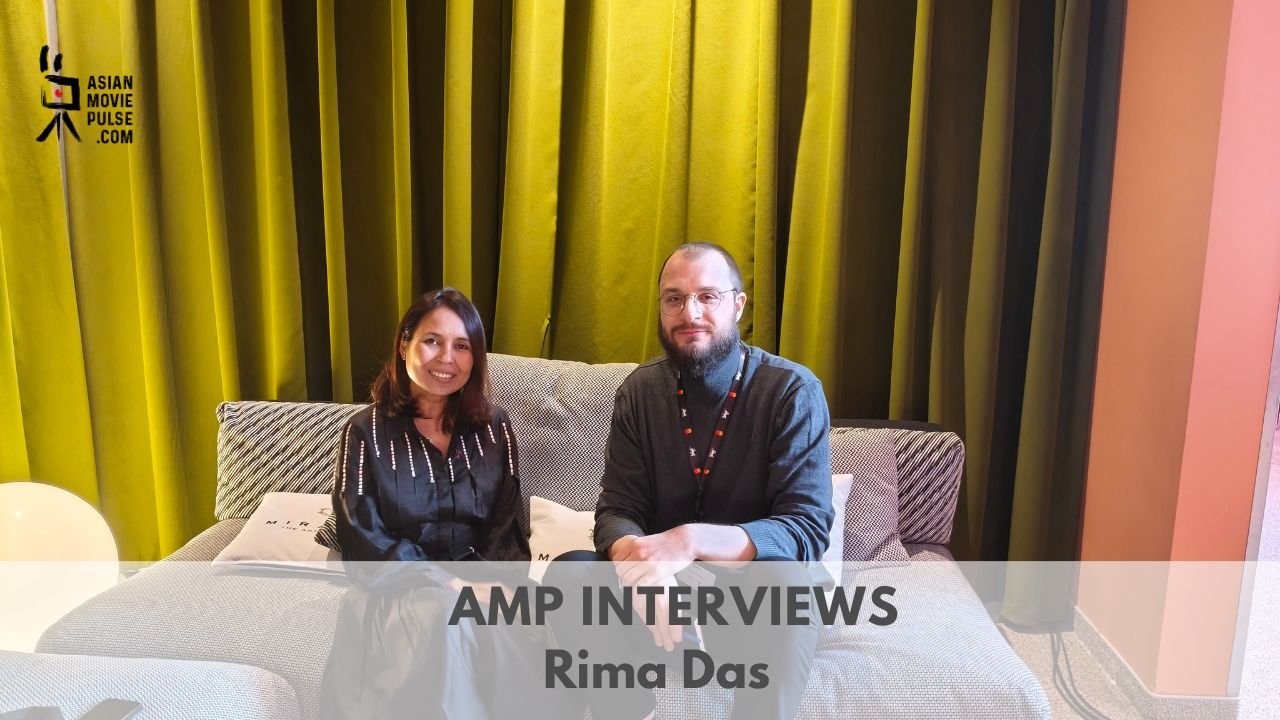
Indian auteur Rima Das returns to the international spotlight with “Not a Hero,” premiering at the Berlin International Film Festival. Known for her intimate, observational storytelling in films like “Village Rockstars,” Das once again turns her gaze toward childhood — this time exploring courage, displacement, technology, and the quiet emotional landscapes of young people navigating a rapidly changing India.
We spoke with the filmmaker in Berlin about the origins of the project, working with children, rural-urban tensions, and the impact of AI on today’s youth.
From Personal Observation to “Not a Hero”
Das reveals that the film began organically, inspired by her nephew Bhargav, who plays the central character, Mivan.
“I have been observing him since he was born in 2013,” she explains. “He grew up in the village, but I felt he could play a city boy. Maybe because of the internet — the way he talks, the way he walks — I saw something in him.”
Originally conceived under a different title and story concept, the film gradually evolved during production. Shot over six schedules across a year, the project transformed as Das began paying closer attention to the children she was working with.
“In the past, children would listen to me. This time, I listened to them,” she says. “They are more demanding, more intelligent, but their focus is shorter. I realized I needed to make the film from their point of view.”
This shift led to a fundamental rethinking of the narrative and its central theme.
Redefining Heroism
The title “Not a Hero” reflects Das’s desire to challenge conventional depictions of bravery.
“We see so many films about superheroes defeating villains,” she notes. “But heroism is not always fighting and winning. Sometimes it is stepping back, observing, being quiet.”
Rather than pushing the young actors toward overt performances, Das created situations and allowed authentic reactions to emerge naturally. Much of Mivan’s emotional expression is subtle — fear, hesitation, withdrawal — captured in nuanced moments rather than dramatic gestures
“When I was editing, I noticed how beautifully those small nuances came through,” she says. “His emotions were real.”
The result is a portrait of courage rooted in honesty and emotional vulnerability rather than spectacle.
Working With Children vs Adults
For Das, the distinction between directing children and adults is profound.
“Children are honest and transparent,” she explains. “Adults are more institutionalized. They want to perform, to impress, to prove themselves.”
Children, she suggests, simply exist within the moment. That authenticity aligns perfectly with her observational filmmaking style, which favors naturalism over scripted rigidity.
Improvisation played a significant role in “Not a Hero,” with Das designing the situations but allowing emotional responses to arise spontaneously. This method continues her long-standing engagement with young performers, as seen in her earlier work.
Migration, Materialism, and Modern India
The film begins with Mivan being sent to the countryside due to his parents’ financial struggles — a scenario Das suggests is increasingly common in contemporary India.
“With rapid growth, migration has increased,” she says. “Earlier, people lived in villages more steadily. Now, everyone travels where the money is.”
Das points to the growing divide between government and private schooling, even within the same families, and the rising pressures of materialism amplified by social media.
“Sometimes it looks good from outside, but inside it is broken,” she observes.
The pandemic further intensified financial instability for many families, particularly small businesses. In “Not a Hero,” these socioeconomic tensions quietly shape the emotional backdrop of Mivan’s journey.
Giving Children the Power to Choose
A central theme of the film is children’s autonomy — or lack thereof.
“In our childhood, we never had the power to choose,” Das recalls. “Adults decided what was right for us.”
She recounts personal anecdotes, including family situations where even small decisions — like a girl wanting to cut her hair — become points of adult control
Through the film, Das hopes to encourage adults to listen more carefully.
“Allow them to choose. Care for them differently,” she says. “Even small decisions matter.”
Although Mivan himself does not initially have a choice in being sent away, the film subtly critiques that old-school parental authority, suggesting that change — though slow — is emerging.
AI, Technology, and Childhood
One of the film’s most striking sequences involves Mivan watching AI-generated videos on his phone — a long, immersive scene Das deliberately chose not to cut
“I see how children are exposed to so many things now,” she says. “Even adults don’t know how to control it.”
Fast technology, instant rewards, and constant digital noise shape young minds in ways that are often invisible but deeply influential.
“They may not understand everything they see, but it shapes them,” she warns.
Rather than condemning technology outright, Das emphasizes the need for adults to engage with children more compassionately and attentively.
“It’s easy to tell them what is right or wrong. But we brought them into this world. We must understand them differently.”
Living Between Village and City
Das herself divides her time between Mumbai and her native village. Each environment provides something essential.
“Mumbai gives freedom,” she says. “But the village is my roots — nature, rivers, trees, silence.”
While city life offers mobility and professional opportunities, her creative grounding remains tied to rural landscapes and cultural memory. This duality informs much of her cinema — balancing modernity with tradition, speed with stillness.
Humanity in the Age of AI
Asked about the broader rise of AI and its social implications, Das remains reflective rather than alarmist.
“We don’t have control over everything happening,” she says. “So we must focus on being human.”
Nature, she explains, serves as her compass — reminding her to remain authentic and emotionally connected. Her films aim for universality through genuine human emotion rather than technological spectacle.
“Finally, I believe love is everything,” she concludes. “If there is love, we can always win.”
With “Not a Hero,” Rima Das continues to refine her quiet, humanistic cinema — offering a gentle but powerful reminder that heroism may lie not in grand gestures, but in survival, sincerity, and the courage to simply be oneself.



