
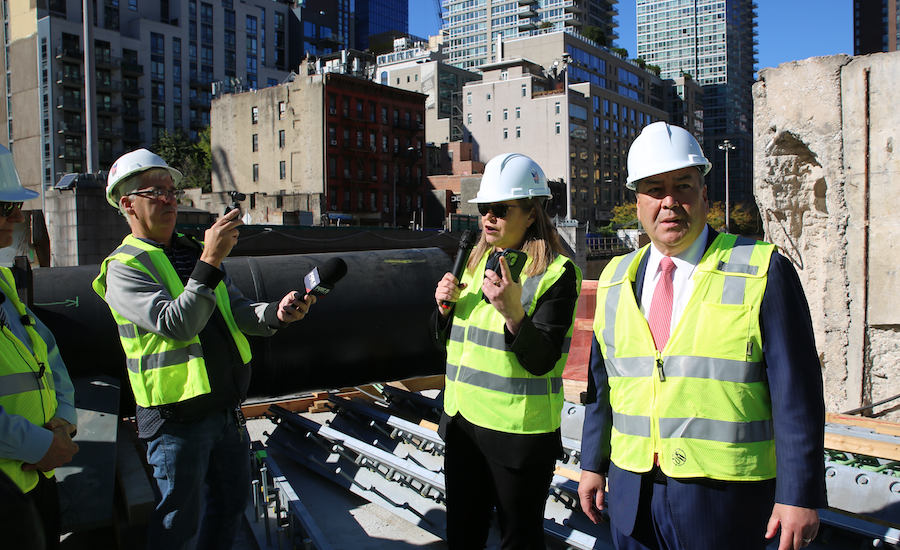
While there is still much work ahead, the Port Authority of New York and New Jersey took some time to mark a minor construction milestone of the long-term project to completely remake its busy Midtown Manhattan bus terminal.
The first part of the first phase includes the installation of a massive concrete deck over a nearby street, a crucial step toward building the project’s first major structure of the remake of the nation’s busiest bus terminal. The four quadrants of the decks over nearby Dyer Avenue and the Lincoln Tunnel Expressway are now being installed, with the latest quadrant seeing final concrete placement Oct. 24.
The 3.5-acre concrete deck will eventually support a community green space when the entire project is completed, but during the years of construction it will serve as staging areas for buses and equipment. Construction of the deck sections began in May 2025, with work expected to be completed in 2027.
The midtown Manhattan bus terminal is the busiest in the world according to the Port Authority, serving over 200,000 passengers daily, with more than 76.4 million riders passing through the terminal each year. The bus terminal was first built in 1950 and has been expanded multiple times, but the Port Authority says it has outgrown its footprint.
The first phase of the rebuild entails construction of a new structure to the west of the existing bus terminal, to be completed by 2030. This building will serve as a temporary bus terminal during the years that the original terminal is rebuilt and expanded, and will become a storage and staging facility for the buses when the rebuild completes.
After a decade of planning, the Port Authority settled on this multiphase approach, allowing for ridership capacity to be maintained or even grow during construction. When completed, the staging building will have space for 350 buses, reducing the amount of time buses need to be in the main terminal building or on local streets. It will also allow for a more open design of the new main terminal building, with a sunlit atrium and a more welcoming atmosphere than the famously crowded and difficult-to-navigate existing bus terminal.
The long project timeline is due to the bus terminal needing to remain at normal capacity throughout construction , Port Authority Executive Director Kathryn Garcia told reporters during a briefing Oct. 23. “We have to do all of this to keep everything operational.”
So far, the greatest change to the terminal’s operations has been the addition of temporary ramps for buses to enter and exit the multistory structure. Concrete caissons 50- to 60-ft-deep have been installed for new ramp structures, and some old approach ramps have been cut out and removed to make way for nearby construction. Many of the terminal’s existing ramps go through what will be the footprint of the new temporary bus terminal, so they will have to be replaced with temporary ramps.
 massive rebuild of the Manhattan bus terminal. Photo by Jeff Rubenstone/ENR” data-description data-id=”8187″ style=”display: block; float: none; vertical-align: top; margin: 5px auto; text-align: center;” alt=”Steel columns” data-uuid=”YTAtMjQwMDk5″>Steel supports for permanent and temporary bus ramps exhibit the first above-ground evidence of the massive rebuild of the Manhattan bus terminal. Photo by Jeff Rubenstone/ENRBut this will not impact the current flow of buses in and out of the terminal, says Cate Britell, director of tunnels, bridges and terminals at the Port Authority. “Some ramps will go in and out of the construction zone, so there are temporary changes to the ramps. But this will only affect empty buses in the evening, as most buses come in on different ramps,” she told reporters. New temporary ramps will keep buses out of the construction zone and off local streets, Britell added, emphasizing the Port Authority seeks to rebuild its flagship transit terminal without impacting its functionality.
Looking for quick answers on construction and engineering topics?
Try Ask ENR, our new smart AI search tool.
Ask ENR →
Source: www.enr.com



