
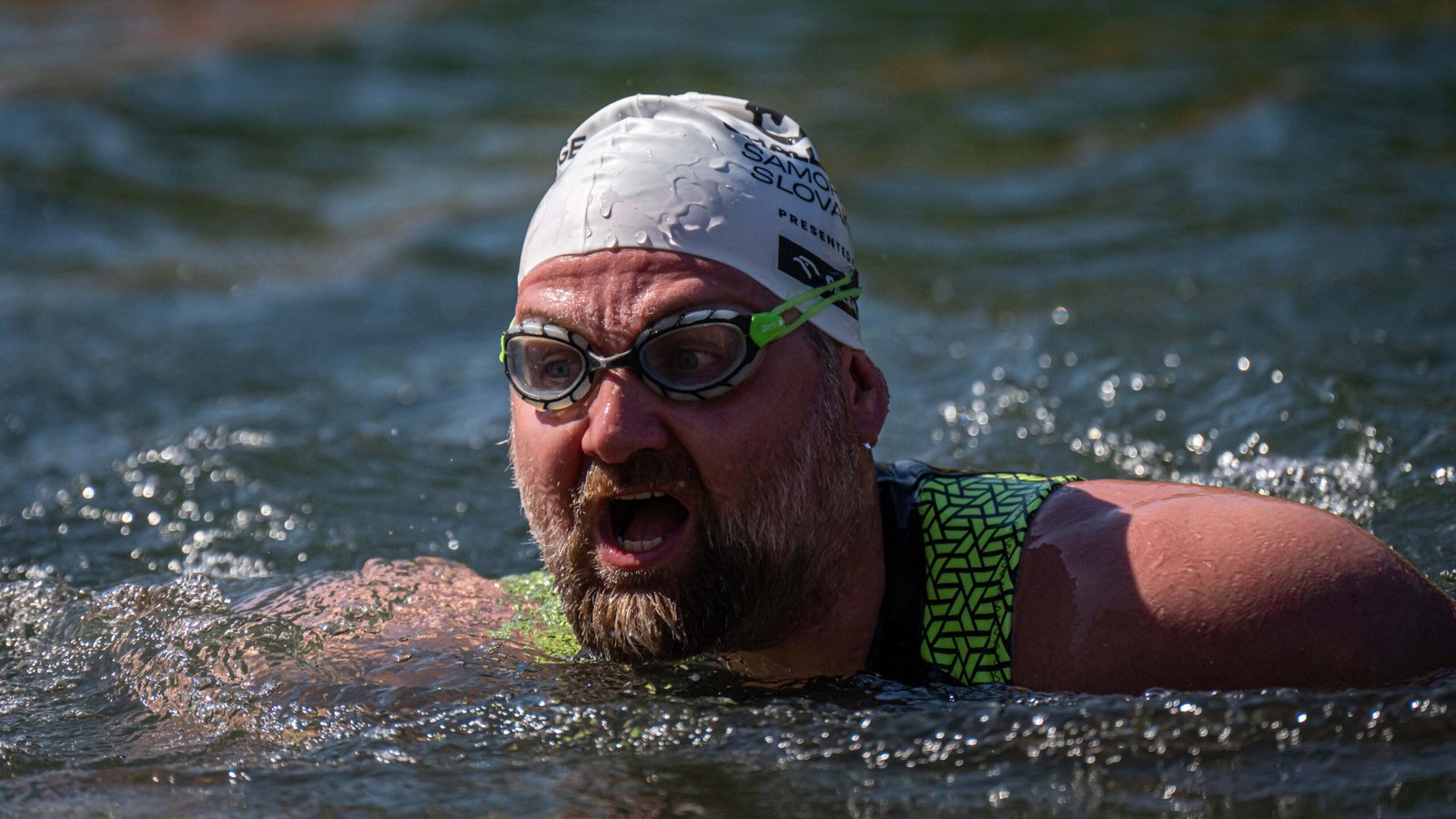
Adding a few simple steps to your training could help you avoid panic when swimming in open water. Get tips from Olympic coach Paul Asmuth.
Avoid panicking in open water by using these strategies from Olympic coach Paul Asmuth. (Photo: Challenge Family)
Updated June 18, 2026 11:12AM
Swimming in a pool is one thing. Swimming in a large body of water – with strong currents, limited visibility, and dozens of other athletes around you – is something else entirely.
And while just the thought of open water swimming can induce a fight-or-flight reaction in some, it is part of the sport of triathlon – and there are ways to overcome those fears. We tapped acclaimed marathon swimmer and Olympic coach Paul Asmuth for tips on achieving what he calls “open-water safety mastery,” aka having the plan and tools to connect with the water instead of fearing it.
So whether you’re training for your first triathlon or simply want to feel more comfortable beyond the shoreline, here’s Asmuth’s best advice for staying calm from start to finish.
1. Make visibility part of your safety plan
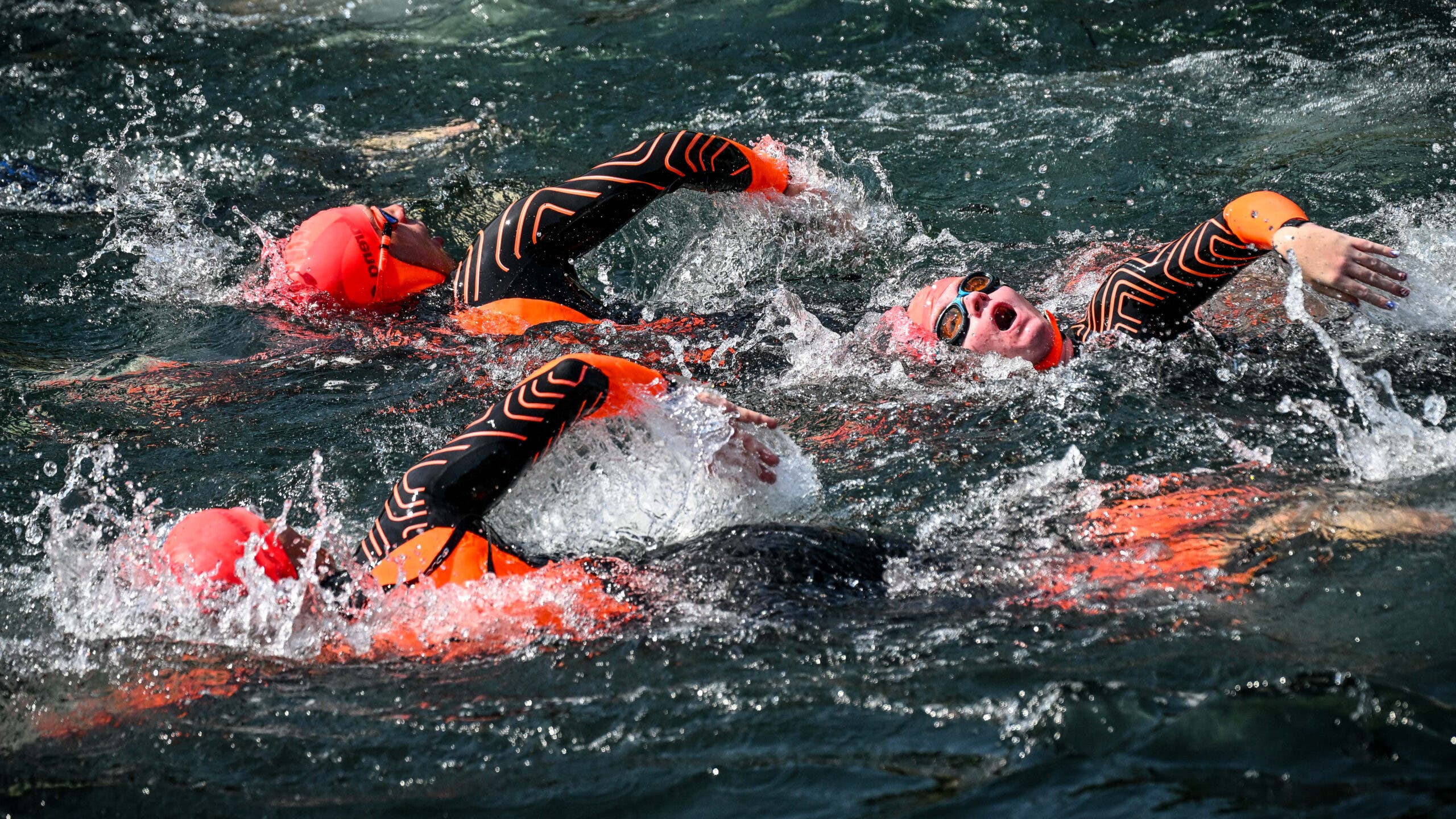
One of Asmuth’s simplest recommendations? Wear a swim buoy in both training and racing.
“I just heard about an open water race in Hong Kong with thousands of swimmers, and everyone had to use one,” he says. “I hope more and more people start using them.”
The brightly colored inflatable buoys trail behind swimmers, making them easier for boats, paddleboarders, and fellow swimmers to spot. While Asmuth doesn’t consider them a lifesaving device in an emergency, he believes they’re among the easiest ways to make open-water swimming safer and offer more peace of mind.
“I use a buoy so that when I’m training, my wife can watch me and always see where I am,” Asmuth says. “If there were a situation where I’m in trouble, someone could easily find me.”
2. Start small and stay where you feel safe
According to Asmuth, one of the biggest misconceptions about open-water swimming is that you need to train in a large (or deep) body of water to prepare for a race in the same environment. In reality, confidence comes from familiarity – and that can start in a much more shallow space.
Asmuth encourages swimmers to create a short, repeatable course in water shallow enough to stand in if you need a break. At the Wild Swimming Residency Asmuth is leading this November at The Cove on Eleuthera (an island off The Bahamas), participants – regardless of their experience level – will start off in a smaller, shallow cove to help them get oriented.
“Find a nice, shallow place to start, just so you can ease into it,” he says. “The water doesn’t have to be deep, and it doesn’t have to be a long distance. Even during my own marathon-swimming training, I’ve trained in the Russian River near my home in California on a course that was only 200 meters long. I just go back and forth.”
That repetition, he explains, builds confidence. And once your mind knows you can always return to shore—or stand up if you need to—the panic begins to fade, leaving more room to focus on technique, breathing, and actually enjoying the experience. (Need tips on finding somewhere to train near you? Check out US Masters Swimming’s Open Water Hub.)
3. If you panic: Pause and reset
Even the world’s most experienced swimmers have moments when things don’t go according to plan. You might get kicked by another competitor, swallow a mouthful of salt water, or freak out in the murky depths. According to Asmuth, the key to overcoming the panic is knowing how to respond when it sets in.
“Panic doesn’t have to end your swim,” he says. “You just need to know how to reset.”
Rather than trying to power through the anxiety, he advises swimmers to pause and let themselves settle before continuing. That often means rolling onto your back instead of treading water vertically, which can quickly drain energy and make a stressful moment feel even more intense.
“I like to swim on my back, and take a few backstroke strokes to relax and breathe,” he says. “I don’t think it’s good to sit up vertically because that takes a lot more energy. And if the water’s choppy, you might swallow a bunch of water.”
And remember: if something goes awry or feels off during a race, the support kayaks and paddleboards are there for a reason. Asmuth highly recommends heading to one when you’re having trouble so you can reorient yourself.
“I have been swimming for years, and I still use the kayaks. I recently had a race where I got kicked in the face,” he shares. “So I had to take a minute to make sure I wasn’t cut and bleeding. I adjusted my goggles and then was able to head on my way.”
Finally, Asmuth says one of the best ways to quiet your nerves is to remember that you’re not the only one dealing with the unexpected.
“No matter what’s happening in the race – whether it’s hot, cold, or there are jellyfish – it’s the same for everyone,” he says. “You can’t control the conditions. You can only control your response to them. And that’s what open-water confidence is really about.”



