
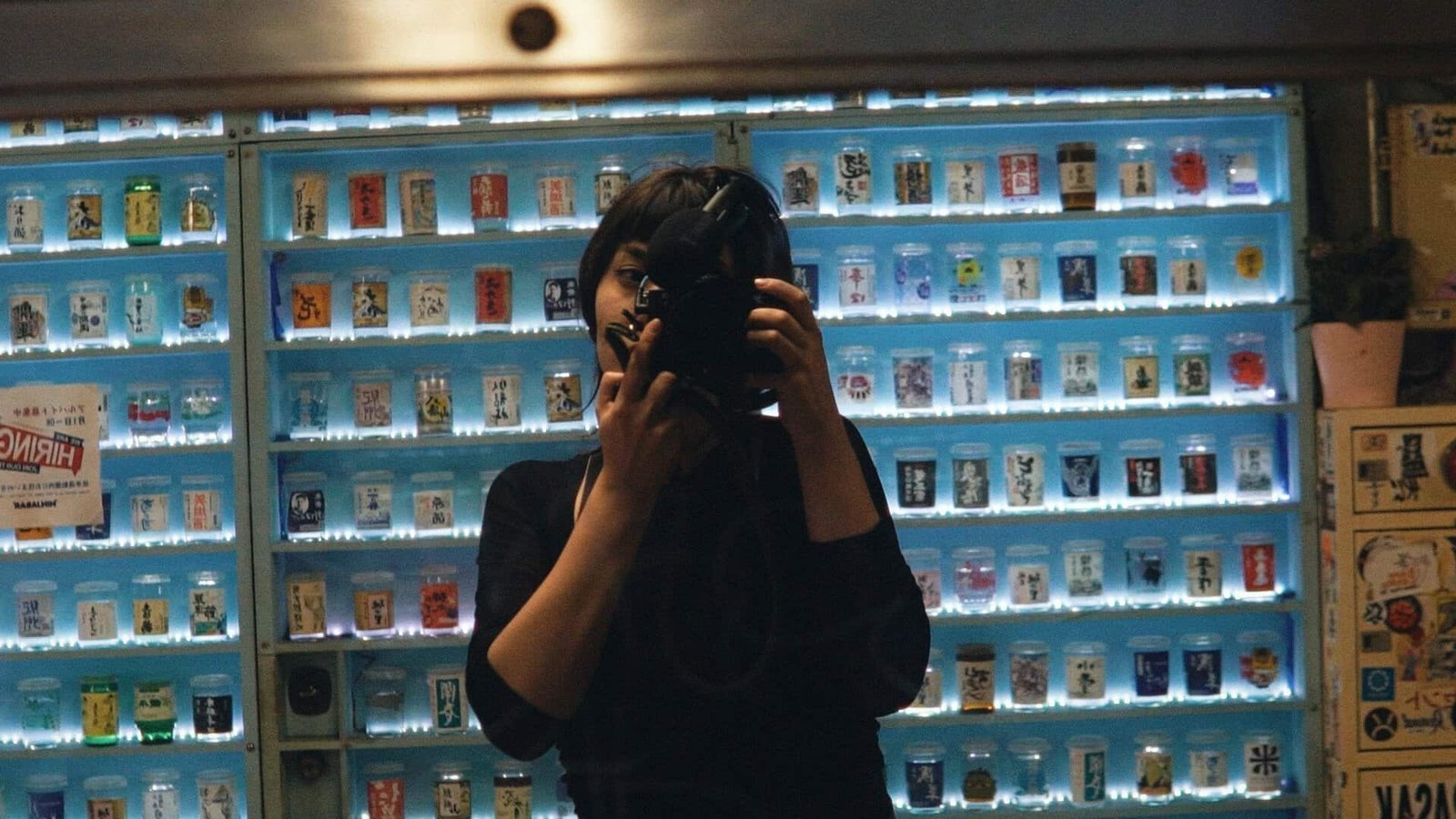
After her award-winning graduation short “A Tomato Tragedy” (2023), Dutch-Japanese filmmaker Kiriko Mechanicus returns with something far more unsettling. Her debut short documentary, “How to Catch a Butterfly”, is an essayistic piece of filmmaking that takes a look at the collision of desire and death.
How to Catch a Butterfly is screening at Cinemasia
The film is grounded on the 2021 Atlanta spa shootings. When 21-year-old Robert Aaron Long murdered eight people – six of them Asian women – he claimed he was simply “eliminating temptation.” Mechanicus doesn’t just observe this horror. She engages with it through a radical, almost masochistic approach by writing letters to the killer. She isn’t looking for his humanity. Instead, she’s trying to figure out why his violent delusions feel so strangely familiar. For Mechanicus, Long isn’t an outlier; he is the terminal point of the fetishization she has dealt with her entire life
The opening sequence is bathed in a heavy, oppressive red light. A woman disrobes in a kimono – a deliberate, bitter nod to “Madame Butterfly”. In the background, the sterile audio of news reports from the shooting creates a nauseating contrast. It’s a bold start that cuts straight to the film’s core: When does the “oriental” fantasy stop being a costume and start becoming a target?
Mechanicus moves between two worlds. One is a grainy, dreamlike past; the other is the sharp, cold reality of digital cinematography. We follow her to Japan, where she visits her grandmother. These scenes – shaky handheld shots of family albums and quiet domesticity – ground the film’s heavy politics in something tangible.
The heart of the film, however, lies in the kitchen-table conversations between Mechanicus and her mother. They dissect the “quiet, polite Japanese woman” trope not as a cultural trait, but as a cage. Her mother speaks of emancipation – a conscious refusal to perform for the Western gaze. It is a rare, honest moment of deconstruction.
Then, the film shifts into the dark. Mechanicus layers the voice of the killer over interviews with men from dating apps. Their comments are blunt, bordering on the sociopathic and give insight into the resons why they seek out Asian women. They seek out to them because they believe they are “raised to be slaves.” Hearing these modern “Weeb” fantasies played over Long’s confession creates a suffocating sense of being hunted.
Mechanicus doesn’t let herself off the hook, either. She asks the most painful question a victim of fetishization can ask: Am I performing for these men? Do I find a twisted pleasure in being the “Japanese girl” they want?
“How to Catch a Butterfly” is a difficult watch, and it should be. Supported by a pulsing, techno-heavy score and shots of lonely neon streets, it offers no comfort and zero closure. Mechanicus doesn’t give us a happy ending; she gives us a mirror. It is a self-questioning, unsettling meditation on what happens to the psyche when you realize you’ve been living in a role written by your predator.



