
After a 2025 race that ended with triathlete Jose Perez paralyzed, a gross negligence lawsuit, and new owners, the 2026 edition of the iconic Escape From Alcatraz triathlon will go off this weekend. What’s changed – and is it safe to race?
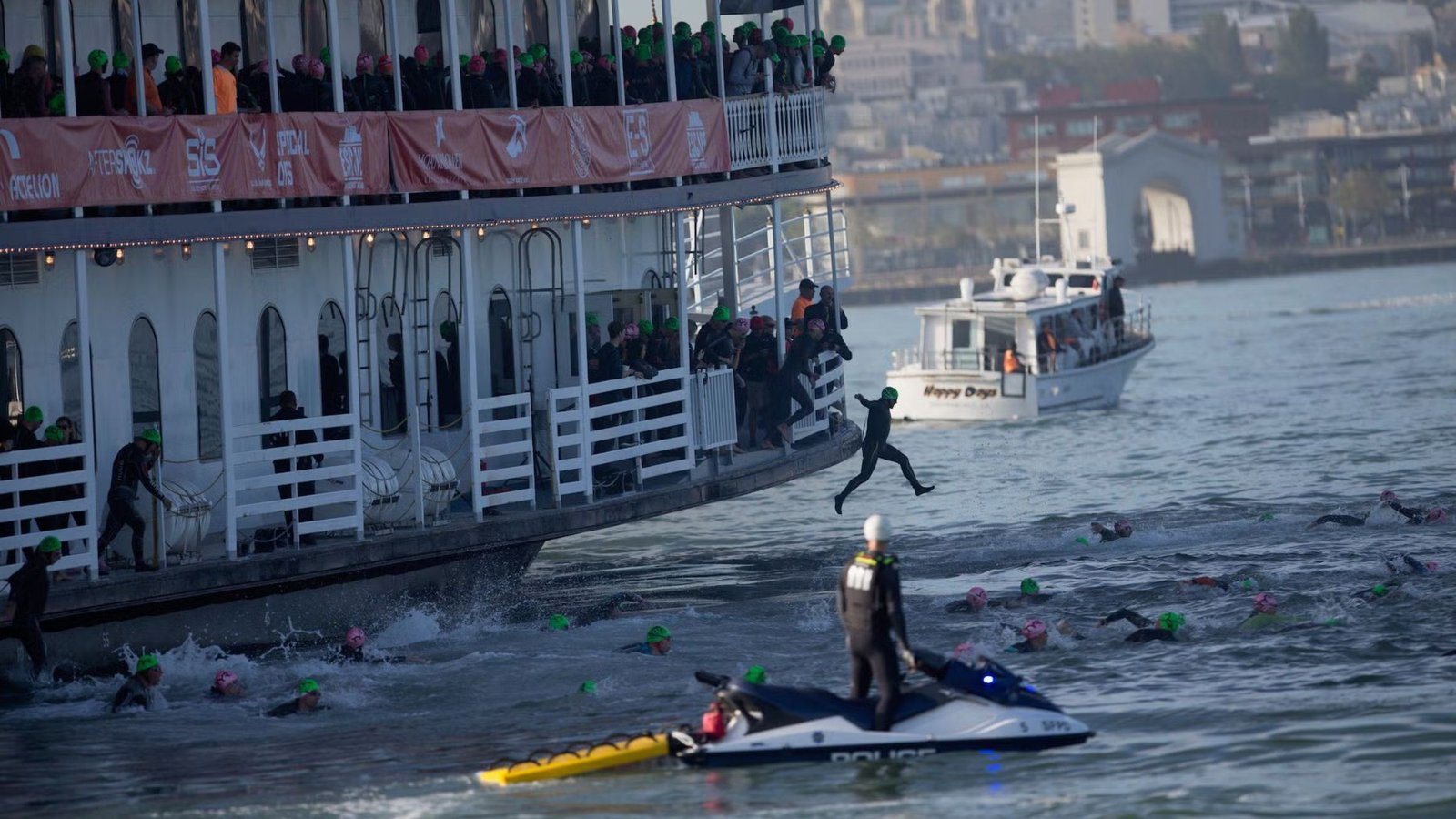
Athletes jump off the San Francisco Belle to begin the swim start of the Escape From Alcatraz Triathlon. (Photo: Rocky Arroyo/Triathlete)
Published June 2, 2026 07:00AM
Escape From Alcatraz Triathlon, one of the world’s most popular and iconic events, takes place this weekend with a shadow still hanging over it from last year’s race, which ended with one triathlete in intensive care.
When Chicago firefighter Jose Perez leapt from the San Francisco Belle, it was expected to be just another start of the many triathlons he had competed in. What he didn’t expect was for the next athlete to jump from the paddleboat to land on him.
“My brother was instantly paralyzed,” Samuel Perez told local news outlet SFGATE. “He knew instantly he couldn’t move his arms and legs. Being a paramedic and a fireman, he knew the severity of the situation.”
Perez was transferred to the Zuckerberg San Francisco General Hospital and Trauma Center, where he underwent spinal surgery, and a GoFundMe page launched by his friend Angel Correa has raised almost $100k.
As reported by SFGATE, Perez launched legal action in September against the race organizers, IMG, for gross negligence, with the case still ongoing. Triathlete attempted to reach Perez, but was advised to contact his law firm, which did not respond.
New owner, vague response on Alcatraz swim safety plan
In the last year, IMG has sold its action sports division, including the Alcatraz race, to MARI, a new live events company founded by prominent American businessman Ariel Emanuel and principal investor Mark Shapiro, former head of content operations at IMG.
Triathlete put a series of questions to the new organizers, including the following:
- What specific changes have been made to swim safety protocols since last year’s event?
- What objective criteria will determine whether the swim is modified, delayed, or canceled this year?
- Who has final authority on race-morning safety decisions, and what expertise informs that call?
- How have athlete screening and preparedness expectations changed?
- What did organizers learn from last year’s athlete feedback and incident reviews?
- How do you balance preserving the event’s iconic challenge with reducing avoidable risk?
We received the following statement: “We continually review every aspect of the event and refine our protocols as part of our standard event planning process. Any updates to race procedures will be communicated directly to registered athletes.”
Despite asking for further clarification, the statement remained unchanged, and per their direction, pointed questions to the athlete guide, released just over a week before the race.
2026 athlete guidance on swim safety at the Escape from Alcatraz Triathlon

While the organizers refused to confirm whether any specific changes have been made, it is clear by comparing previous athlete guides, such as this 2022 edition, that more emphasis is being placed on communicating safety protocols at the swim start.
The 2026 edition devotes a full page to “The Jump,” urging athletes to review the swim start procedure carefully. It confirmed the race will continue its time-trial start, with participants sent off the boat in three locations (bow, stern, amidship) and in sequence by the starter once the landing zone is clear of athletes.
It states staff will usher athletes to the edge of the boat from where they are in the hand of the starter, and in bold capitals states, “DO NOT JUMP until instructed and DO NOT HESITATE when the signal to jump has been given.” If there is any hesitation, the athlete will be pulled from the queue and returned to the line.
It enforces (once again caps their own) that “NO DIVING IS ALLOWED” and also provides jump tips, advising a stride-jump technique with one foot in front of the other and arms out to the side to prevent a deep entry. Athletes are also instructed to swim away from the boat as quickly as possible, with a whistle in use to alert safety personnel in the water if necessary.
Course conditions and water support at the Escape from Alcatraz Triathlon
The guide goes on to say how the current will pull athletes west toward the Golden Gate Bridge and that the water temperatures are typically mid-50 degrees F in early June.
Safety personnel may reposition slower athletes 200 meters from shore to help them complete the swim leg, and there is a hard cutoff of 8.30 a.m. (the race gets underway at 7 a.m.), and anyone still in the water will not be allowed to finish the race.
As for safety support, the guide states there will be approximately 100 watercrafts consisting of kayaks, small boats, jet skis, and stand-up paddleboards in the bay to assist swimmers if needed, and racers can hold on to a kayak for a period to reorient themselves without risking disqualification.
EMS plan and historical safety record at the Escape from Alcatraz Triathlon
Through a freedom of information request to the City and County of San Francisco, Triathlete has confirmed the submitted Emergency Medical Services (EMS) plan for 2026 remains unchanged from 2025. They anticipate a far heavier medical presence on Sunday for the age-group race compared to the Professional Triathletes Organization’s event on Saturday (a male-only pro field racing the T100 distance).
According to the EMS plan, there will be five ambulances on site on Sunday, including one positioned at the swim finish.
Accidents and incidents happen in triathlon, and with the race set for its 45th anniversary, the Escape from Alcatraz Triathlon has a comparatively excellent safety record, with only one death: in 2013, 46-year-old father of three Ross Ehlinger suffered a fatal heart attack during the swim. However, last year’s incident threw a renewed spotlight on the safety measures deployed, chiefly for the start of the mile-and-a-half swim across San Francisco Bay.



