
As soon as the first clips from DreamWorks’ latest animated film, “Forgotten Island,” started popping up online, there was one specific shot that caught on fire online — the lip pointing. It happens at a goodbye party for Raissa Molina (Liza Soberano), who is heading to Caltech. Her best friend Jo (H.E.R.) is late to the party and asks around to see where Raissa is, when an older woman points with her lips in the right direction. It’s a small moment, a visual gag that can easily go over the audience’s heads amidst all the other jokes in the sequence. But audiences familiar with Filipino culture immediately caught on to it, as did Latino fans and many others who recognize that gesture as the most potent and accurate way to point at something.

“That moment had been in the script since the first draft, because we wanted to put in as much as we can from our personal experience with Filipino culture,” director Joel Crawford told IndieWire. “Growing up around Filipinos, the lip point was something that was so specific and unique to me, so it’s beautiful that it transcends into other cultures. Adding that felt like a celebration of it, but also something that makes characters feel real. And in adding that specificity about the culture, it ends up being the most universal aspect of the movie because it invites everyone in.”
The lip pointing may not happen in a pivotal scene, or be important for a character, but it became a sort of symbol for the film’s approach to representation. Later in the film, Jo does the lip pointing because an animator thought it would be a good idea to reprise it, after learning about its place in the culture. Indeed, in addition to having an authentically Filipino cast and a cultural consultant to really capture Filipino culture, the animation team found their own ways of homaging or capturing aspects of Filipino culture to bring to the movie.

When creating the character of Joe, the animation team based a lot of her hand expressions on Filipino skater Margie Didal and her own hand gestures, while the villainous Manananggal’s movements were created by the animation team watching choreography done by Filipino-American dancer Phil Tayag, who brought a pop locking influence to the vampire-like creature.
“When we first approached DreamWorks and Universal with this story, it was important to everybody that we got every detail of this story and this culture right,” director Januel Mercado said. “
After challenging what was thought possible with DreamWorks animated films in “Puss in Boots: The Last Wish,” Crawford and Mercado push the studio’s visuals forward with “Forgotten Island.” With most of the story taking place on the island of Nakali, which is populated by all sorts of mythical creatures, to really capture the fantastical possibilities of this world, the movie’s visuals go wild, taking inspiration from 1990s Filipino art as well as anime from that time period.
For Crawford, the big lesson learned from “The Last Wish” was that you could take big swings in the animation style and the visuals, but you could also do specific things in the story with those visuals. Indeed, when it came to “Forgotten Island,” the idea of memories and friendship became not only central to the story of Jo and Raissa, but also to the eclectic visual styles represented in the movie.

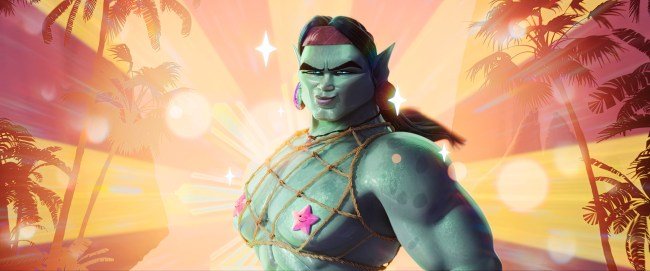
“The idea became that we could push the animation styles to represent the different ways people recall memories,” Crawford explained. “We didn’t need to be limited by Western CG-style animation, but actually bring in some of our own nostalgia into it and make sure it fit the characters. When Raww tries to explain what happened when he met Jo and Raissa, he sees himself as way cooler than he is, so he sees himself as Goku or Guile from ‘Street Fighter,’ the animation going 2D in an action-heavy tone. But when we meet Mermahn, he is very shallow and narcissistic, and we felt his glamorous point of view fit the aesthetic of ‘Sailor Moon’ with the silly kind of heart-shaped lens flare.”
Still, just because you can go Super Saiyan doesn’t mean you let go of reality. Instead, the directors worked with the head of cinematography, Scott Cullen, to make sure the film had a live-action look to it. The idea was to capture the nostalgia of growing up, while being able to feel the camera in the space the action takes place in, as if it was a physical set.
“Joel and I really wanted to make sure you feel like live-action, you feel the cameras there, and the way the light interacts with the lens is reminiscent of tangible photos we grew up taking, where you don’t know how they’ll develop,” Mercado said. “ We wanted to add imperfections, and to have interaction of weather on the camera, like condensation of rain and droplets on the camera.”
This all added to making “Forgotten Island” look like a part of the evolution of DreamWorks Animation, while standing out as something entirely fresh and unique. As Crawford said, the studio doesn’t really have a specific house style like other big studios. “Every movie requires innovation and pushing boundaries and finding solutions,” he added.



