
Robert Dillon has had his share of bar fights. When he wound up in jail, he detested sharing space with men who were there for committing crimes against children.
“I may come off a little abrasive, but I promise you, I got a soft spot for kids, and I got a soft spot for (the) elderly,” he told the Tampa Bay Times.
So when a deputy arrested Dillon in 2024 on charges that he tried to lure a child, the 52-year-old commercial crab fisherman from Fort Myers was devastated.
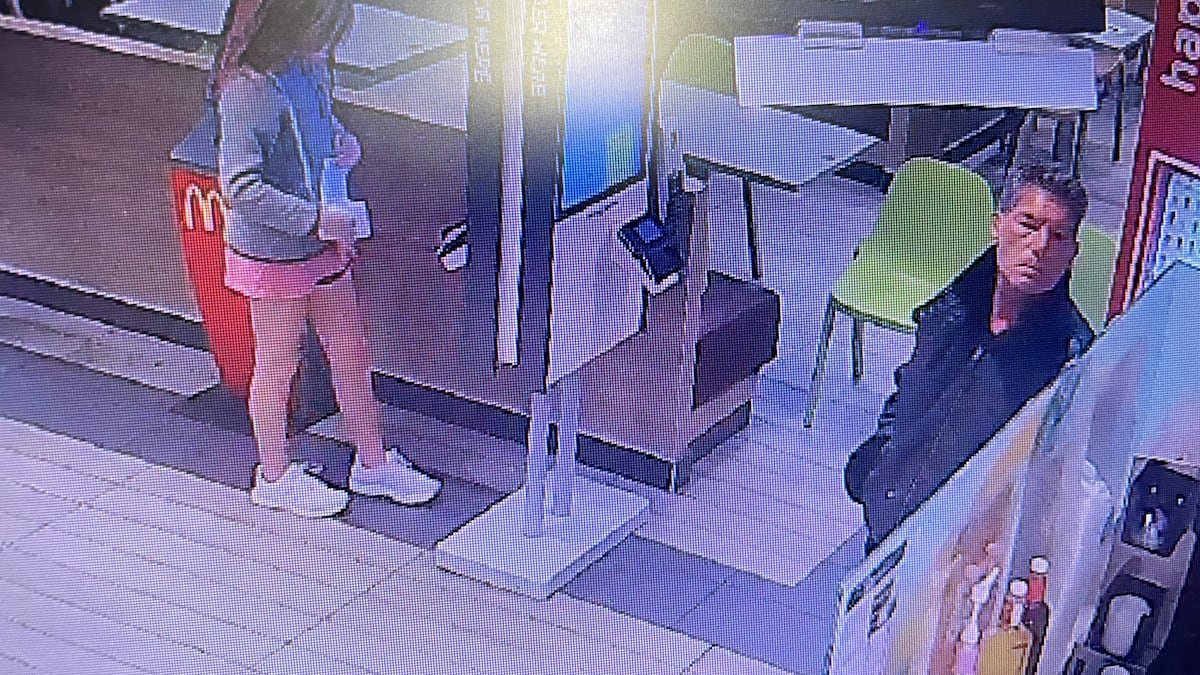
Police accused Dillon of repeatedly asking a girl under the age of 12 to leave a Jacksonville Beach McDonald’s with him. An officer used facial recognition technology to link Dillon to an image of the real suspect, even though Dillon has never been to Jacksonville Beach.
This month, Dillon and the American Civil Liberties Union filed a lawsuit against the city of Jacksonville Beach, Jacksonville Sheriff T.K. Waters, two officers involved in the arrest and Pinellas County Sheriff Bob Gualtieri.
The lawsuit blames Dillon’s arrest on officers’ improper use of Florida’s facial recognition system, their lack of training and the failure of police department policies to address the technology’s “known and inherent risks,” according to the complaint.
Gualtieri’s office operates the facial recognition system. More than 200 law enforcement agencies have access to the database of around 15 million images of people in Florida jails and prisons, plus the state’s sex offender database. Federal agencies including the FBI and Immigration and Customs Enforcement also have access, according to the lawsuit.
With additional clearance, departments can search for matches in a database of about 25 million Florida driver’s license photos.
The claim that the Pinellas County Sheriff’s Office failed to train officers is “patently false,” Sgt. Jessica Mackesy, a spokesperson for the agency, said in an email.
The facial recognition system provides law enforcement a valuable tool, she added, but officers cannot rely on it alone. She blamed the Jacksonville Beach officer who investigated the case for lack of due diligence.
“This is a people problem, not a facial recognition problem,” she said.
Arrest relied on surveillance footage
On Nov. 2, 2023, a man at a Jacksonville Beach McDonald’s repeatedly asked a girl under 12 if she wanted to leave with him, the lawsuit states. She refused and called her parents, who were in a hotel next door.
By the time police arrived shortly before midnight, the man had left. The next day, a Jacksonville Beach police officer took cellphone photos of surveillance video capturing the man, according to the lawsuit. The officer was not named as a defendant in the lawsuit.
The McDonald’s manager called the man in the surveillance video a “regular customer” whom she had seen several times.
Dillon lives in Fort Myers, more than 300 miles away.
“I’m not driving six hours to get a cheeseburger every day,” Dillon told the Times. Aside from driving along Interstate 95, Dillon said he has never been to Jacksonville.
Later in November, Scott O’Connell, a Jacksonville Beach police officer, sent a flyer with the surveillance images to nearby law enforcement agencies, the lawsuit says. A sergeant with the Jacksonville Sheriff’s Office ran the photo through the facial recognition system, which found a “93% match” to Dillon, whose mug shot was in the system for a prior arrest.
The quality of the photo used to run the search, called the “probe image,” was so poor that it violates the Pinellas County Sheriff’s Office’s guidelines on using the software, the lawsuit alleges.
In early January 2024, O’Connell assembled a photo lineup that included Dillon and five other men, the lawsuit says. Another Jacksonville Beach police officer showed the lineup to the McDonald’s manager, who pointed to Dillon as the suspect.
“I am 100% sure,” she wrote in a statement to police, according to the lawsuit.
O’Connell requested license plate reader data on two vehicles registered to Dillon for the days surrounding the incident. Neither appeared in Duval County, home to Jacksonville Beach. O’Connell omitted those details from his application for an arrest warrant, according to the lawsuit.
Nearly 10 months after the encounter between the girl and the man, a judge signed the warrant for Dillon’s arrest.
On Aug. 26, 2024, Dillon was arrested at home in front of his wife, according to the lawsuit. He spent the night in a cold jail cell and pledged the title of his truck to make bond.
He spent several thousands on a lawyer and pleaded not guilty. About two months later, prosecutors dropped the charges.
It took nearly a year for Dillon’s arrest to be expunged from his record, the lawsuit states.
It is not clear if police found the man who beckoned the young girl at the McDonald’s. The Jacksonville Beach Police Department referred questions to a lawyer, who did not respond to multiple requests for comment.
An ‘incredible tool’ faces scrutiny
Florida is unique in that its facial recognition system is managed by the Pinellas County Sheriff’s Office, which was the first to adopt it, said Nathan Wessler, one of the ACLU lawyers representing Dillon. Elsewhere, statewide agencies manage the system.
“Pinellas County has taken on some real risk here,” said Wessler, who is also deputy director of the ACLU’s Speech, Privacy and Technology Project.
Dillon’s lawsuit comes nearly a decade after a study by the Georgetown Law Center on Privacy and Technology found that the sheriff’s office’s broad guidelines for using the software raise privacy concerns and could lead to misuse.
At the time, Gualtieri argued the tool allowed police to more efficiently use information they already had access to, like driver’s license photos or mugshots.
Through a spokesperson, the sheriff declined interview requests for this story, citing pending litigation.
The sheriff’s office launched the Face Analysis Comparison and Examination System, or FACES, with federal grant money in 2001.
The software is a form of artificial intelligence that allows law enforcement to upload a probe image, which the computer compares to a database of other photos.
The agreement between the Pinellas County Sheriff’s Office and Jacksonville Beach Police Department states that “results are strictly investigative leads,” according to a copy of the agreement provided by the sheriff’s office. The agreement states that arrests and other actions by police can not be based solely on the system’s results.
“Facial recognition results are never ‘matches,’” Mackesy, the sheriff’s office spokesperson, said in an email. “Independent investigation is required.”
Michael King is a professor of electrical engineering and director of the Florida Institute of Technology’s Identity Lab, which researches facial recognition technologies. He said problems arise not because of the technology, but because of overreliance on it.
“As long as the technology is used responsibly, it is an incredible tool for law enforcement,” King told the Times.
Unlike a DNA test or finger printing, facial recognition software finds the face with the most similarities to the person in the probe image. When police present a witness with a lineup of photos, the witness can mistake an innocent lookalike for the suspect, as happened in Dillon’s case, Wessler said.
As databases have grown to include millions of photos, the likelihood police will find a doppelganger has also increased, said Margaret Bull Kovera, a psychology professor who studies witness identification and facial recognition software at John Jay College of Criminal Justice.
“You’re more likely to have somebody who looks extraordinarily like the person they’re searching for when you have a larger database,” Kovera said. “The problem is, it might not be the right person.”
Detroit in 2024 barred police from showing witnesses a lineup of photos without finding more evidence linking the crime to the person identified by the computer. The policy change was part of a settlement the city agreed to after being sued by the ACLU in a wrongful arrest case.
Police are banned from using the technology in Boston; Oakland, California; King County in Washington state and most parts of Vermont, Wessler said.
The lawsuit lists 14 other wrongful arrests linked to facial recognition technology nationwide. Three of those happened in Florida.
In Dillon’s case, the ordeal cost him his career.
A life upended
Dillon still wakes up at 4 a.m. out of habit, but he no longer watches the sunrise over Estero Bay from his crabbing boat.
Like his father and grandfather, Dillon made a living harvesting the fruits of the sea. He said he found fishing, the craft of his forefathers, boring, so at age 10 he boarded his first crabbing boat. He quit school six years later to launch a career as a commercial crabber.
When he was arrested in 2024, he missed peak stone crab season, the lawsuit said. He fell behind on rent and spent thousands of dollars on legal fees.

Dillon said his mug shot remained on the Lee County Sheriff’s Office website for almost a year. He avoided leaving the house because he did not want people to ask him about the arrest.
The seafood wholesalers who typically bought his harvest moved on to other suppliers. Dillon left after more than 30 years in the crabbing business. Today, he runs a small landscaping company.
Dillon waited until the charges were cleared before telling his stepdaughter, Brenna. He remembers she burst out laughing.
“Are you kidding me?” he recalls her asking. “That’s a joke.”
When Dillon saw his 13-year-old daughter laugh, he wanted to cry.



