
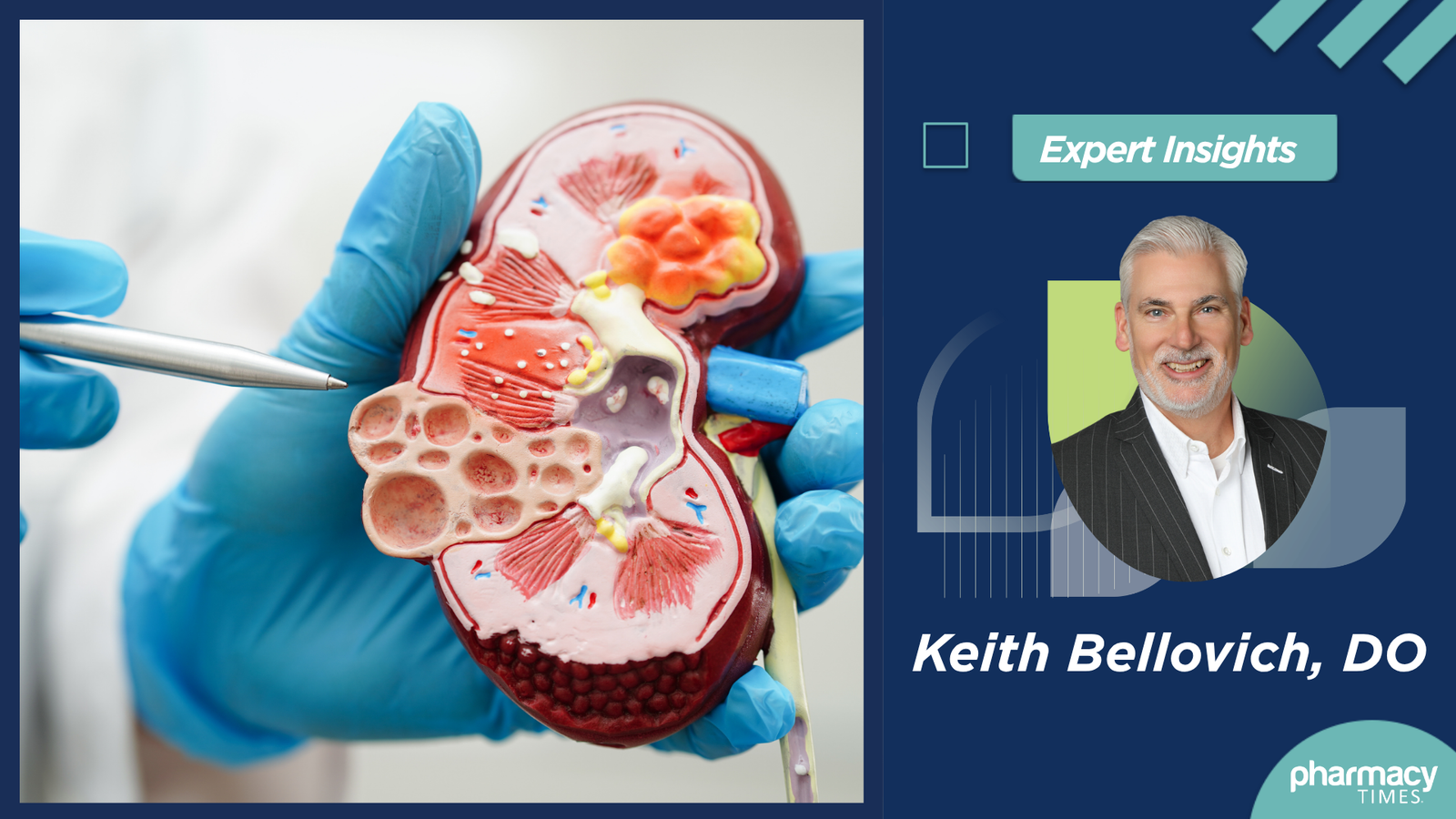
Chronic kidney disease (CKD) remains significantly underdiagnosed, with up to 90% of affected individuals unaware of their condition, creating opportunities for earlier detection in the post-COVID-19 era, according to Keith Bellovich, DO, chief nephrologist at Strive Health, in an interview with Pharmacy Times.
Bellovich emphasized that pharmacists should focus on identifying at-risk patients—particularly those with diabetes, hypertension, or a family history of kidney disease—and advocate for appropriate screening, including blood pressure monitoring, serum creatinine to estimate glomerular filtration rate, and urine albumin-to-creatinine ratio. Bellovich advised against screening based solely on prior COVID-19 infection, instead recommending a risk-based approach guided by clinical indicators.
Community pharmacists are well positioned to recognize early warning signs such as uncontrolled hypertension, edema, and foamy urine, facilitating timely referral and intervention. Early detection, combined with emerging therapies and value-based care strategies, may improve outcomes and reduce progression to dialysis or transplantation.
Pharmacy Times: Can you please introduce yourself?
Keith Bellovich, DO: I’m Keith Bellovich. I’m a nephrologist from Detroit, Michigan. I’m the chief nephrologist for Strive Health, which is a value-based care company working to help improve quality and care delivery across the country. I was formerly the chief medical officer of an acute care facility within the Henry Ford Health System. Before taking this position, I was deeply involved in COVID-19 relief during our surge in 2020 and so became intimately familiar with the consequences of how we delivered acute care to those patients, as well as our nephrology response.
Pharmacy Times: The study raises concerns that COVID may have accelerated an undetected kidney disease crisis. How prevalent is undiagnosed CKD, and why does it go undetected?
Bellovich: As mentioned, there are 37 million Americans that we know about who carry the diagnosis of CKD, but many also aren’t even aware of it. It’s a good question as to why we’re seeing this “epidemic” of kidney disease. Certainly, we’ve done ourselves a service by trying to raise awareness and increase identification of those who may be at risk. Secondly, we’ve changed our guidelines to make sure that if individuals are engaged in the health care system, proper screening is being carried out so that it can be identified. Genetics are certainly posing a risk and are a factor—we’re making new discoveries all the time about certain genetic profiles that may predispose individuals to kidney disease, particularly among sociodemographic groups with higher predisposition, including African American and Hispanic populations in the United States.
Key Takeaways
- Up to 90% of patients with CKD are unaware of their condition, contributing to delayed diagnosis
- Pharmacists should prioritize screening in high-risk populations, including those with diabetes and hypertension
- Early signs such as edema, foamy urine, and uncontrolled blood pressure can signal underlying kidney disease
In addition, we’re aware of obesity playing a role as a contributor to the development of new-onset diabetes, which then predisposes individuals to kidney disease as well. So there are many factors at work simultaneously. We’re doing our best to raise awareness of the importance of proper, cost-effective screening and increasing public awareness. As you know, there have even been advertisements on commercial television now, which is helping to increase that awareness—something I’ve never seen in my career before.
Pharmacy Times: For patients with diabetes or hypertension who previously had COVID, what screening should pharmacists advocate for, and how frequently?
Bellovich: Just to reiterate, the essence of proper screening is identifying individuals who are predisposed to developing kidney disease—patients with diabetes, pre-existing high blood pressure, or a family history of kidney disease. There are also other social factors that can contribute.
The key component is having that individual engaged with their primary care provider, who can order proper screening. That includes a simple blood pressure check and monitoring in the right setting to ensure it’s an accurate reflection of their blood pressure. Secondly, if there are any historical or symptomatic conditions uncovered, laboratory testing is important—either a serum creatinine to assess glomerular filtration rate and overall kidney function or a urine albumin-to-creatinine ratio to determine if there is proteinuria present, which could be a risk factor for progressive kidney decline.
Pharmacy Times: What role could community pharmacists play in early CKD detection, particularly for post-COVID patients?
Bellovich: I think the importance is familiarity with those early indications—patients complaining of lower extremity edema, those seeking refills of their blood pressure medications and finding that their usual routine is not controlling their blood pressure like it used to, or new-onset hypertension. These can certainly be early clues that perhaps we should be investigating further. Sometimes high blood pressure itself can be a sign of CKD or kidney involvement.
Pharmacy Times: Is there anything else that you would like to add before we finish things up?
Bellovich: I would just say I applaud the kidney community for raising awareness by reaching out to the lay public so that they, too, can be aware of kidney disease and what it can do. The importance of early screening allows us to identify disease earlier and implement therapies sooner. We have many therapies now that were never before available to help slow progression. This allows us, especially in a value-based care model like Strive, to reach individuals earlier, prepare them, and potentially avoid progression—perhaps even eliminating the need for dialysis or a kidney transplant in their lifetime.



