
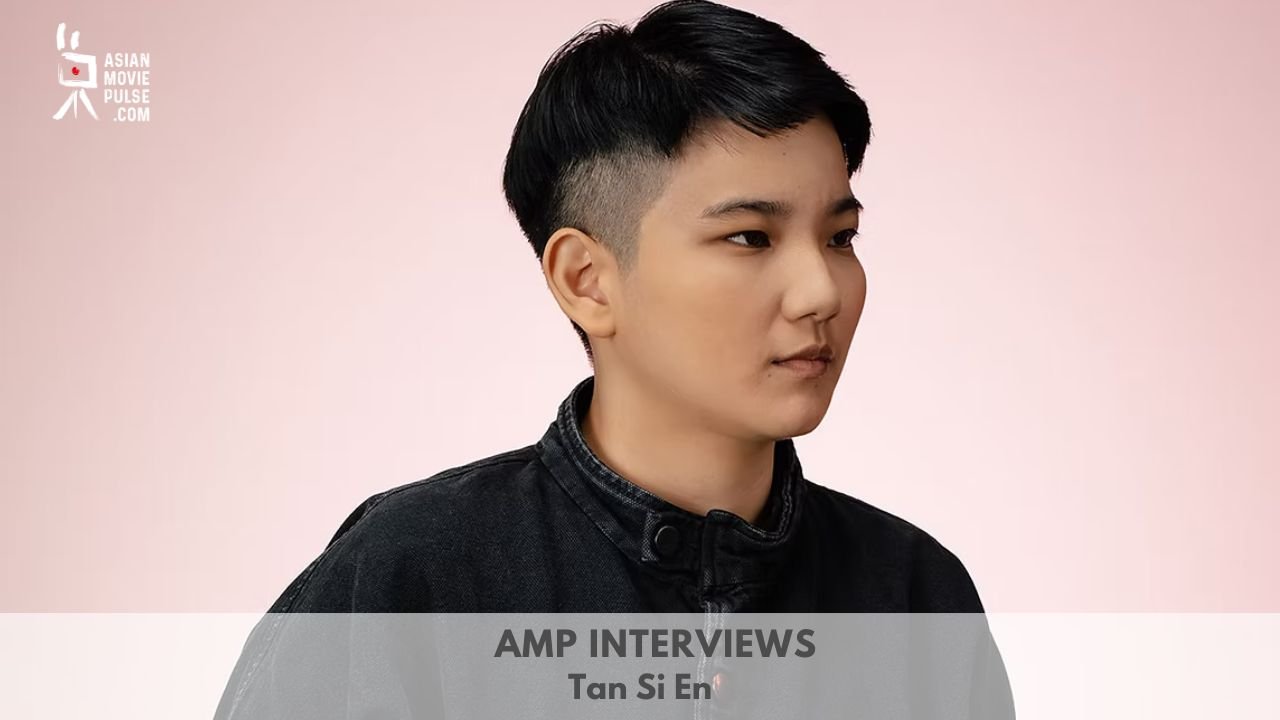
Singapore-based producer Tan Si En, Managing Director of Momo Film Co., has quietly emerged as one of the key figures shaping contemporary Southeast Asian cinema. With a slate that spans art-house features, genre experiments, and international co-productions, the company has recently entered a new phase following its acquisition by Beach House Pictures, part of the Fremantle group. In this conversation, Tan discusses the origins of Momo, the implications of the deal, and the evolving landscape of filmmaking in the region.
Founded in 2018, Momo Film Co. was born out of Tan’s desire to support a new wave of Southeast Asian filmmakers. From the outset, the company aimed to create a “safe space” where directors could develop their voices and tell stories that were, in her own words, edgy, distinctive, and never boring. Over the years, that ethos has translated into a steady output of films that have traveled widely across the festival circuit, with Tan emphasizing that the goal was always to combine artistic integrity with international reach.
This trajectory eventually led to the company’s integration into Beach House Pictures, a move that Tan describes as both strategic and serendipitous. The collaboration began shortly after the pandemic, when questions of sustainability and growth became increasingly pressing for independent producers. A chance encounter with a Beach House executive led to further discussions, and the alignment of interests proved clear. While Beach House was looking to expand into scripted content, Momo was seeking ways to scale its operations and diversify into series production.
As part of the Fremantle ecosystem, Momo now operates within a larger corporate structure, something that has introduced new levels of financial discipline and long-term planning. However, Tan is quick to note that creative autonomy remains intact. The company continues to choose its collaborators and projects freely, while benefiting from increased access to financing, industry networks, and larger-scale productions. This duality, combining independence with institutional support, appears to define the new phase of Momo’s evolution.
Despite this expansion, the core philosophy of the company has not changed. Tan remains deeply involved in the filmmaking process, often working closely with directors from development through post-production. Her approach is hands-on, driven by a genuine passion for every stage of production, from script development and casting to technical decisions regarding cameras and lenses. This level of engagement, he suggests, is not only a professional necessity but also a personal inclination rooted in her love for cinema.
Momo’s filmography reflects this commitment to collaboration and experimentation. Projects such as “Don’t Cry, Butterfly” exemplify the company’s preference for bold, unconventional storytelling, blending contrasting tones and visual styles, while the close partnership between Tan and the director highlights a process he values as much as the final result. Similarly, “Dreaming and Dying” underscores Momo’s flexibility in production methods, having evolved from what initially began as a short concept into a feature through a resourceful and improvisational approach. A comparable spirit can be found in “A Useful Ghost,” a co-production Tan joined early on, drawn by its distinctive, offbeat sensibility and the director’s unique voice, with the project further illustrating her interest in supporting unconventional narratives and collaborative, team-driven filmmaking processes.
Co-productions, in fact, play a central role in Momo’s operations. For Tan, they are both a financial necessity and a creative opportunity, particularly in a region like Southeast Asia where local markets remain limited, depending on the country. By partnering with international producers, the company is able to share risks, access new resources, and bring together diverse creative perspectives. At the same time, Tan acknowledges that such collaborations require careful management, especially in balancing different cultural approaches and maintaining a coherent creative vision.

Looking ahead, Momo’s slate continues to expand across genres and formats. Upcoming projects include “Nagi Notes,” a co-production with Japan set to premiere in Cannes, as well as “The House on the Moon,” a science fiction feature involving Singapore, Taiwan, and Germany. Another notable project is “Tropical Rain, Death-Centred Kiss,” an animated, post-apocalyptic romance set in Singapore. This diversity reflects the company’s genre-agnostic approach, unified primarily by its commitment to strong directorial voices.
Beyond production, Momo has also taken steps to support emerging talent through initiatives such as the Momo Distribution Grant and Objectifs Short Film Incubator. These programs aim to address gaps in the industry, particularly in helping young filmmakers navigate the often-overlooked aspect of distribution and audience engagement. By providing financial assistance and mentorship, the company seeks to cultivate a new generation of filmmakers equipped to operate within an increasingly complex global landscape.
In terms of the broader regional context, Tan expresses cautious optimism. While markets like Singapore remain challenging due to their limited scale, the wider Southeast Asian region offers significant potential, particularly in countries like Indonesia and Vietnam, where young audiences are increasingly engaging with local content. This dynamic, she notes, contrasts with more mature markets in the West, where production costs are rising and audiences are aging.
Ultimately, Tan’s vision for Momo Film Co. is both simple and ambitious. Rather than focusing on awards or industry recognition, she emphasizes the importance of reaching audiences. For her, the success of a film lies in its ability to connect with viewers, to exist beyond the confines of the screen and resonate on a deeper level. As Momo continues to grow within the global industry, this guiding principle remains at the heart of its mission.



