
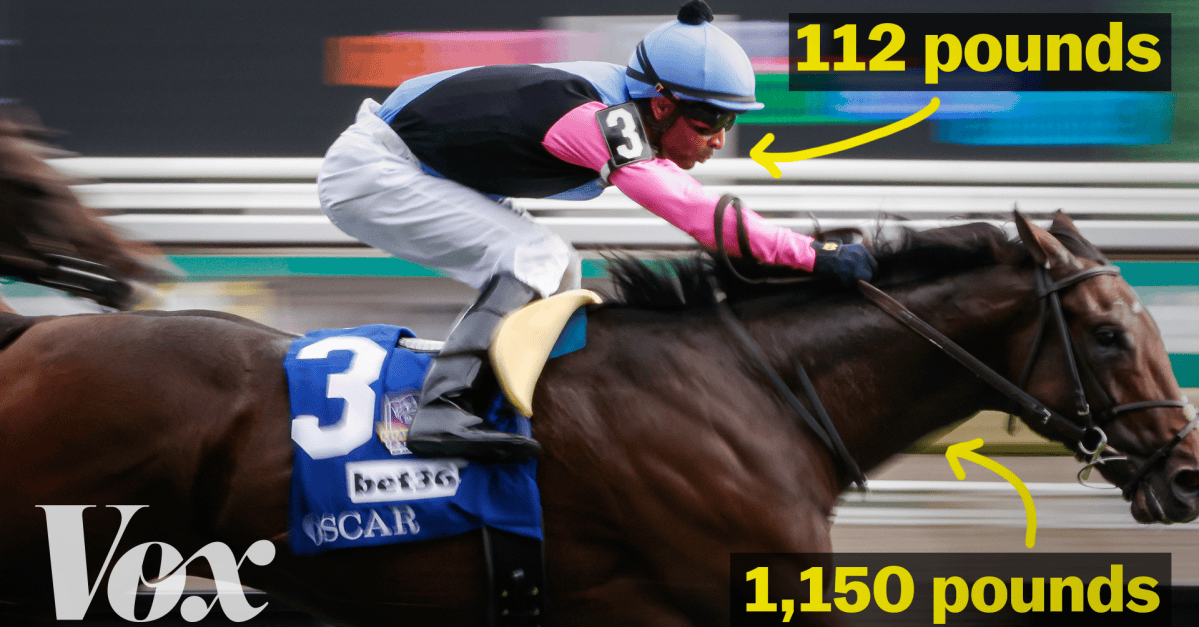
Horse racing can be an unusually dangerous profession for both the jockey and the horse: Riding a half-ton animal at nearly 40 miles per hour means your fate depends on the health and performance of both athletes. And the horse can be at risk of catastrophic injury if the jockey doesn’t have the required physical fitness to maintain proper technique and lightning-quick reflexes.
But new wearable technology and advances in sports medicine are enabling everyone involved in the sport of horse racing to identify risks earlier and prevent injuries to horses and jockeys alike.
In order to find out more about both of these athletes, I took a trip to Belmont Park, to watch competitive horses train and to speak with Dr. Sara Langsam, an equine veterinarian and chair of the American Association of Equine Practitioners Racing Committee. And to learn about the jockey side of the equation, I talked to Michaela Keener, a jockey health researcher at University of Kentucky, and ReyLu Gutiérrez, a jockey who has started in over 6,000 races.
Read more about horse racing safety and health:
This video is presented by Colgate. Colgate doesn’t have a say in our editorial decisions, but they make videos like this one possible.



