
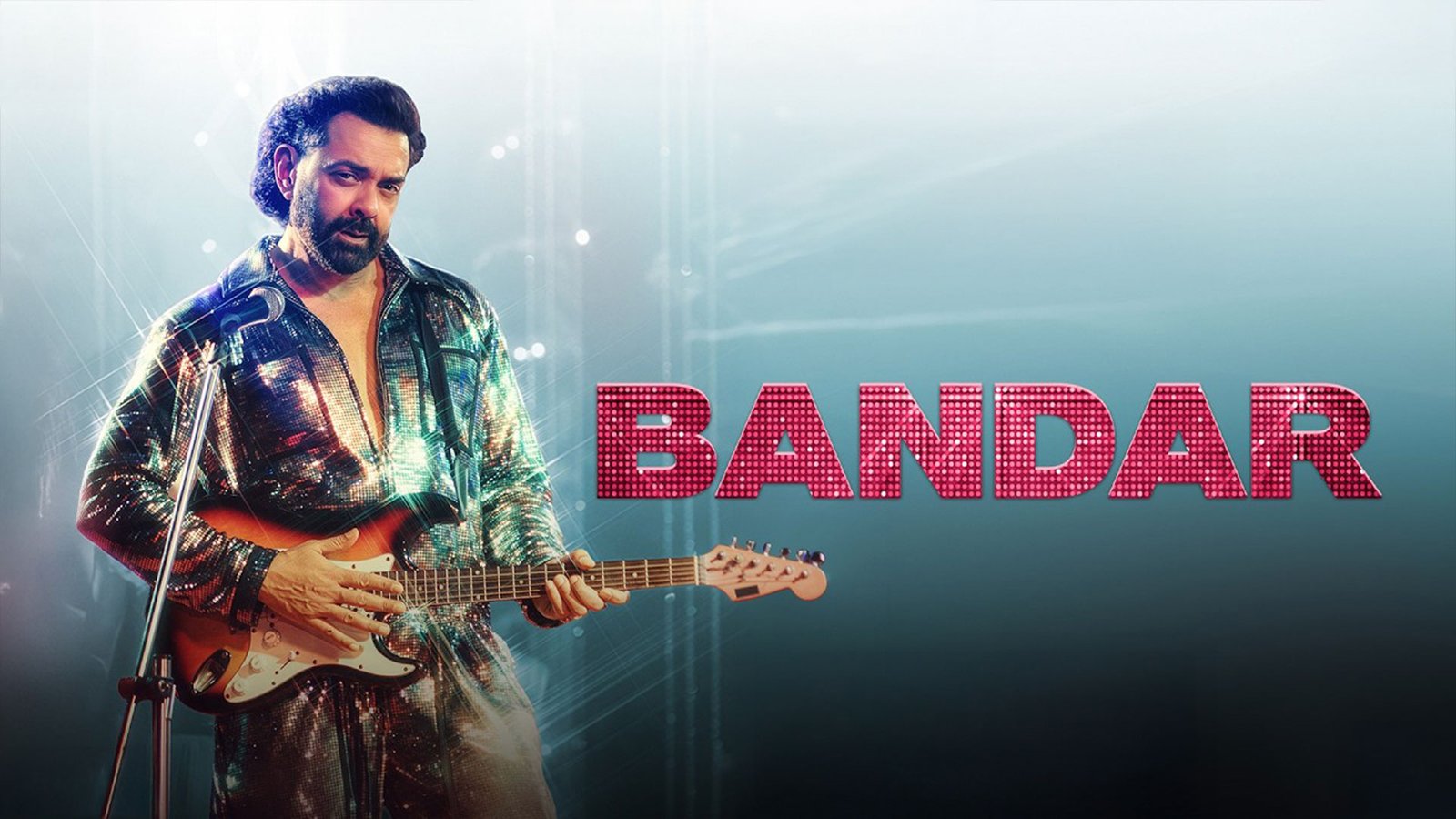
Following its world premiere at the Toronto International Film Festival, Anurag Kashyap’s “Bandar” arrives carrying enough controversy to dominate discussions surrounding gender politics, public perception, and the legal system. Working from a screenplay by Sudip Sharma and Abhishek Banerjee, Kashyap constructs a production that begins with a criminal accusation but gradually expands into a broader examination of authority, hierarchy, and the forces that shape individual lives once control over personal narratives begins to disappear.
The story follows Samar Mehra, a fading pop star whose already declining career collapses when former acquaintance Gayatri Anand accuses him of sexual assault. As the allegation gains momentum, Samar finds himself navigating police investigations, media scrutiny, legal proceedings, and eventually imprisonment. While the premise initially suggests a courtroom drama centered on guilt and innocence, the screenplay quickly redirects its attention elsewhere, using the accusation primarily as an entry point into a much larger and darker world.
Once Samar enters prison, “Bandar” reveals its strongest qualities. Rather than treating incarceration as a temporary narrative obstacle, the screenplay develops the prison into a fully realized ecosystem governed by its own loyalties, rivalries, hierarchies, and unwritten rules. Various groups compete for influence, informal authorities often carry more weight than official ones, and survival depends less on legality than on understanding the codes that regulate everyday existence. In this regard, the production offers one of the more textured depictions of prison life seen in recent Indian cinema.
Kashyap approaches these passages with a strong emphasis on detailed observation, allowing prison routines, alliances, hierarchies, and informal power structures to reveal themselves through everyday interactions gradually. The environment feels lived-in rather than constructed, populated by individuals navigating their own ambitions, fears, and survival strategies. As Samar moves deeper into this world, the narrative continuously uncovers layers beneath the one previously understood, maintaining engagement throughout its substantial runtime.
The screenplay also avoids offering easy answers regarding its central conflict. Questions of innocence, guilt, accountability, and perception remain deliberately unsettled. Rather than functioning as a conventional legal thriller, the production appears more interested in examining how individuals are transformed once they become absorbed into environments operating beyond their control.
Bobby Deol delivers one of the most convincing performances of his career as Samar. Stripped of celebrity status, certainty, and influence, he portrays a man gradually forced to confront circumstances he can neither predict nor manipulate. Deol balances vulnerability, arrogance, confusion, and desperation effectively, creating a character who remains compelling even when sympathy is not guaranteed. Sapna Pabbi brings an unsettling unpredictability to Gayatri, while Sanya Malhotra provides emotional grounding as Samar’s sister, Suhani. Among the supporting cast, Jitendra Joshi leaves a particularly strong impression as Inspector Deore, while Indrajith Sukumaran brings a calm yet intimidating presence to the prison hierarchy.
From a technical perspective, the production remains consistently strong. Shaaz Rizvi’s cinematography effectively emphasizes confinement without resorting to visual excess, while Prashant Bidkar’s production design captures both the physical deterioration and social density of prison life. Aarti Bajaj’s editing maintains tension across the narrative’s shifting perspectives and locations, ensuring that momentum rarely dissipates. Sound design also contributes significantly to the atmosphere, particularly within the prison sequences, where overcrowding, noise, and constant surveillance become integral components of the viewing experience.
The production’s most notable weakness emerges through its treatment of its central thematic idea. The recurring notion that individuals are trapped within various forms of cages, whether created by society, relationships, institutions, or personal circumstances, is introduced effectively early on. However, the screenplay repeatedly returns to the same concept through songs, dialogue, and direct references. The metaphor itself is compelling, but its constant repetition occasionally weakens its impact. The narrative, performances, and environments communicate the same concerns with considerably greater sophistication than the film’s repeated insistence on verbalizing them.
Nevertheless, this issue does little to diminish the overall impact of the production. The immersive world-building, convincing performances, and detailed portrayal of life behind bars ensure that the narrative remains consistently engaging, even when certain thematic points are reiterated more often than necessary.
Engaging, layered, and anchored by the leads’ performances, “Bandar” finds Anurag Kashyap returning to territory that has long suited him best: exploring how individuals negotiate, survive and evolve within environments they cannot fully control. While the production occasionally overstates its central metaphor, its richly detailed portrayal of prison life ensures that its most enduring impressions emerge from the world it creates rather than the arguments it advances.
Sakib Iftekhar is a Melbourne-based film producer, distributor and founder of Screenxcope Australia. His work focuses on South and Southeast Asian cinema, with a strong emphasis on connecting regional storytelling to audiences across Australia, New Zealand, and the international festival circuit. Alongside producing internationally recognized feature films and shorts, he has also been involved in the theatrical and digital distribution of acclaimed South Asian cinema in the region. In addition to his production and distribution work, he contributes as a film reviewer and festival programmer across Australia and North America.



