
It’s a grim day for gamers. After the long holiday weekend, the U.S. video game industry is back on the clock and reckoning with yet another round of devastating layoffs. On Monday, Microsoft announced it would eliminate 4,800 jobs, including roughly 3,200 positions in its Xbox gaming division.
Executives at the company say the cuts are part of a sweeping restructuring that follows years of aggressive expansion across Microsoft-owned brands. But the news also comes just days after a different kind of existential blow hit people who still buy games on shelves.
Last week, Sony announced that beginning in January 2028 it will stop producing discs for all new PlayStation releases. Titles scheduled to launch before that cutoff date will still get their physical editions, but the future of the console won’t be rooted in traditional ownership anymore.

That’s been heartbreaking for some PlayStation collectors, and taken with the mass layoffs at Xbox, this particular moment paints a troubling picture for the future of video games and their production overall. Games and the people who appreciate them are being treated as increasingly disposable by the modern entertainment economy on all fronts. That’s a strange reversal.
Only a few years ago, Hollywood executives and Silicon Valley moguls alike were scrambling to capitalize on the seemingly limitless potential of user-driven entertainment and its higher price tag. Studios raced to adapt beloved game franchises for film and TV, while tech giants spent billions hiring the world’s best developers to ensure their new consoles and releases could compete.
The medium was widely viewed as entertainment’s next great growth engine. But fast forward, and this week’s only real gaming success story belongs to… Netflix. Yes, while thousands of video game lovers wonder what’s next for the art and community they adore, the planet’s foremost streamer for movies and TV is making its most visible push yet toward interactivity — delivered at home for a flat fee.

Of course, the move comes after the post-pandemic bubble burst that left most of the digital media landscape in need of a fresh strategy. But that flattening and its economic consequences are uniquely visible on the Netflix homepage today. Open the app right now and you’ll find an endless feed of acquired and original content spanning multiple mediums. Video games now populate the same hub as films, TV series, podcasts, comedy specials, sporting events, animation, documentaries, and more.
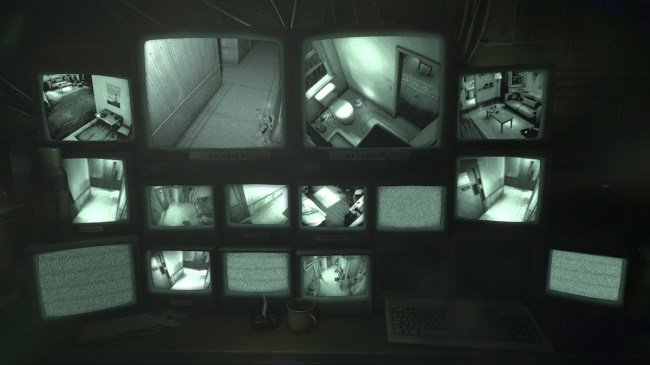
The latest interactive addition is the platform’s original “Unhinged,” an ambitious horror game from Night School Studio that gives special thanks in the credits to Zach Cregger, David Fincher, and Ted Sarandos among others. Netflix purchased the beloved indie games studio in 2021, when video games looked like Hollywood’s final frontier. But unlike Night School’s earlier “Oxenfree” — a sensitive, supernatural, coming-of-age story that now also streams on Netflix — the gruesome “Unhinged” asks players to use their phones as controllers while helping a trapped Zoe Kravitz escape a crazed killer in her apartment.
It’s probably the clearest vision yet for what gaming on Netflix could look like. I’m just not convinced it’s a vision that, even in its strongest iteration, benefits the artists and audiences involved.
To be clear, Netflix making video games isn’t the problem. From the streamer’s Emmy-winning “Black Mirror: Bandersnatch” in 2019 to the cheeky “Love Is Blind” dating simulator available now, many of the company’s original games crossovers are clever and worthwhile. Its other game distribution efforts aren’t bad either. Netflix’s version of “Oxenfree” feels almost indistinguishable from the game that Night School first released in 2016, while party favorites like “Jackbox” and “Overcooked” translate surprisingly well to a service most subscribers enjoy from their couch. Netflix has also become a perfectly reasonable place to introduce subscribers to mobile games they might never think to download otherwise.
Preserving, funding, and sharing digital art is an unquestionably good thing, and that may well have been Netflix’s primary ambition when it entered the gaming space. But seeing “Unhinged” quietly appear on my television one afternoon in 2026 — nestled between Louis C.K.‘s latest stand-up special and a docuseries about the Dallas Cowboys Cheerleaders — I realized that Hollywood wasn’t wrong to believe in the future of video games. But both industries may have overestimated an entertainment economy increasingly comfortable confusing quantity with quality.
“Unhinged” has a smart hook, in theory. Your phone doubles as both the controller and the protagonist’s in-world smartphone. Buzzing with texts and incoming calls, the simulated phone in your Netflix app also works as a flashlight you have to point toward your television. There are genuine flashes of inspiration in that setup, including a moment where your phone screen appears to crack alongside the heroine’s.

Mostly, though, I felt less like I was inhabiting a scary story and more like I’d been hired to act as this random final girl’s secretary. Rather than embodying the main character, I managed her mobile device and dutifully clicked through prompts to advance a generic stalker narrative. In “Unhinged,” players aren’t really encouraged to express or challenge themselves. Instead, they’re following instructions in an exercise that’s ultimately caught between solid proof-of-concept and shaky gimmick.
Sure, Netflix Games are technically still in beta. But promoting and defending an art form’s core humanity isn’t something you patch in later. Despite its technical ingenuity, “Unhinged” mistakes subscriber participation for player agency in a way that suggests what customers want is becoming less relevant. What’s most revealing isn’t any one mechanic, but what the game appears designed to normalize.
A decade ago, Night School built its reputation on intimate, character-driven experiences that trusted gamers to linger in conversations, absorb atmosphere, and make meaningful choices. “Unhinged” feels engineered around a different set of priorities entirely, as a genre survival game that’s instantly accessible, ultraviolent, and roughly the length of a television episode. Pair that with recognizable voices, like Kravitz and “Stranger Things” star Sadie Sink, and the result puts the Netflix brand above all else.
Like the widely popular streaming platform itself, “Unhinged” treats video games like just another category of content to keep subscribers engaged between prestige period dramas and live rock-climbing events. That’s the unfortunate tradeoff embedded in today’s struggling entertainment economy. As a handful of key companies position themselves as gatekeepers for every kind of audience they consider worth monetizing, the artists and stories they showcase begin to matter less than the business model delivering them. The danger then isn’t Hollywood merging with video games, but both devolving into transactional markets that no longer endeavor to keep us entertained — merely subscribed.



