
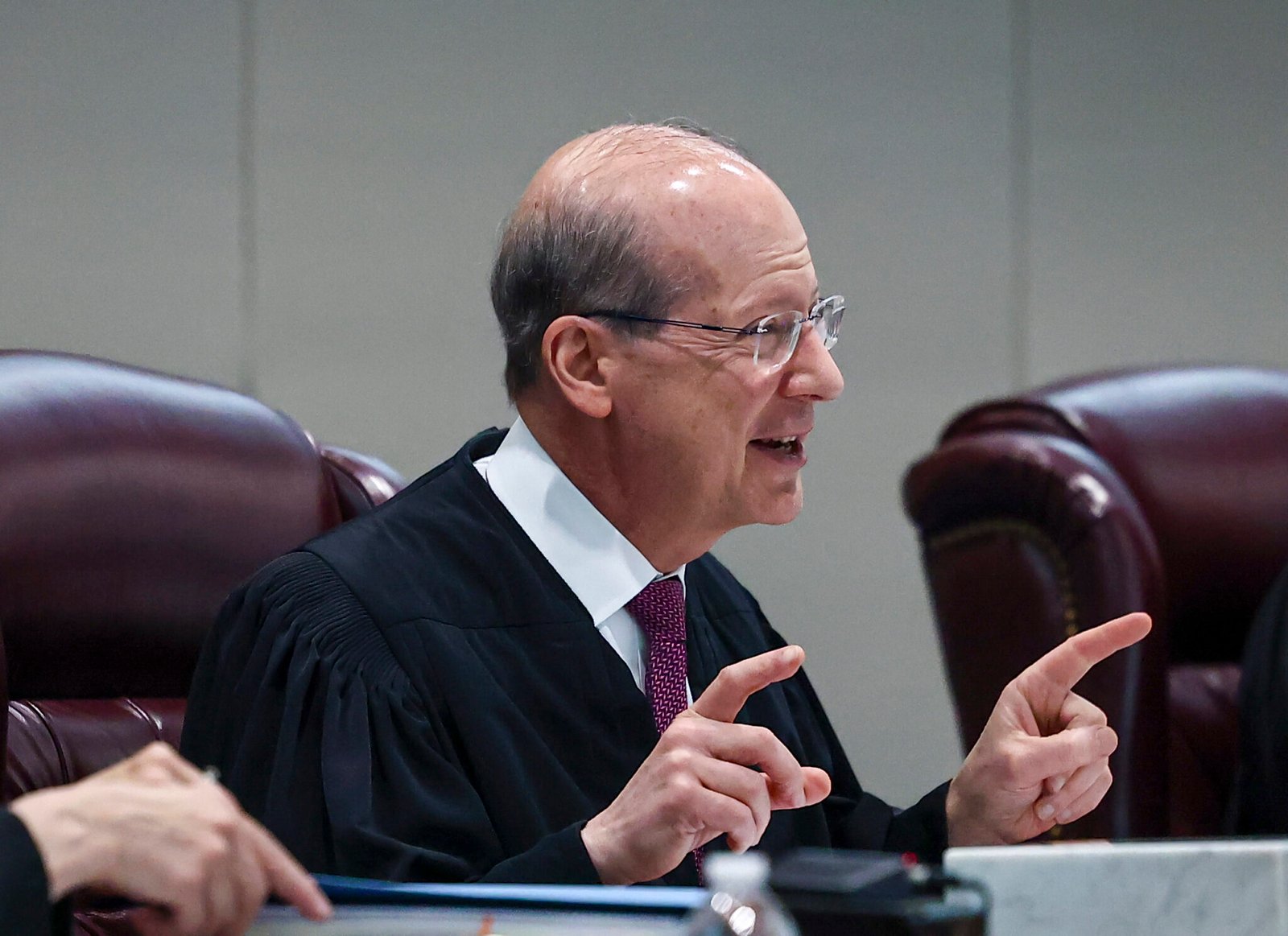
For the first time in years, New Jersey Supreme Court Chief Justice Stuart Rabner raised no alarms about judicial staffing in his annual address on the state of New Jersey’s third branch of government.
Rabner, speaking from New Jersey State Bar Association’s annual conference in Atlantic City, thanked legislators in the state Senate for speeding a slew of nominations that brought judicial vacancies to their lowest levels in years as Gov. Phil Murphy’s final term came to a close in January.
“Last year at this time, there were 52 vacancies. Today there are only 19 — just slightly higher than the 11 vacancies in early January,” Rabner said. “Thank you to everyone involved for responding to a real need and filling the ranks of the Superior Court. By doing so, you have enabled the Judiciary to better serve litigants and the public.”
Seton Hall University renews secrecy bid in priest abuse cases
New Jersey’s judicial vacancies swelled beginning with Murphy’s first year in office in 2018, when just two judges — one nominated by Murphy and a second by former Gov. Chris Christie — joined the Superior Court bench.
In May 2022, 75 of the state’s 433 Superior Court seats were vacant, the absences contributing to a backlog already swelling because of pandemic trial disruptions.
At times, the vacancies pushed Rabner to pause civil and divorce trials in some court jurisdictions because there were too few judges to hear them and still timely address pressing matters, like criminal and domestic violence cases, among others.
Court officials have said the judiciary can operate sustainably with as many as 30 vacancies. Gov. Mikie Sherrill has so far made only one nomination to the Superior Court, and that nominee, Union County commercial and employment law litigator Molly Hurley Kellett, is still awaiting confirmation.
Rabner said the fuller complement of jurists would help New Jersey’s courts address lingering case backlogs and increasingly sophisticated filings from self-represented litigants aided by artificial intelligence.
“Years ago, for example, a self-represented litigant might have filed a 2-count complaint with the court,” Rabner said. “Today, with help from AI, the same complaint may well have 15 counts prepared in minutes with the press of a button. Multiply that by thousands to appreciate how much more time and attention judges must devote to resolve those cases each calendar year.”
The chief justice touted progress on other court programs, including one launched in 2013 to boost oversight of court-appointed guardians who control the finances of people unable to do so themselves.
Guardians’ ranks are growing as the population ages, and though most were upright and honest, there have been instances of fraud, the chief justice said. Oversight by volunteers helped deter that fraud as well as identify it.
“The project is a healthy reminder of what a justice system can do,” Rabner said.
The chief justice lamented threats against judges that have grown increasingly common in recent years and cautioned the threats could reflect a shrinking respect for the rule of law.
He recounted the principles core to the framers as they split the colonies away from King George III’s England 250 years ago. Among other things, those revolutionaries had accused the king of subjecting judges to his will rather than the law.
“They envisioned a government bound by law, accountable to its citizens, and grounded in fairness,” Rabner said of the founding fathers. “When they gathered together years later to draft the Constitution, they created, to borrow from the words of John Adams, ‘a government of laws and not of men.’”
GET THE MORNING HEADLINES.



